Tampilkan postingan dengan label you. Tampilkan semua postingan

Selasa, 21 Juni 2016

Just how much you need to love your Puppy

0

Of course this little monkey no


longer need bottles but think


back to the very beginning
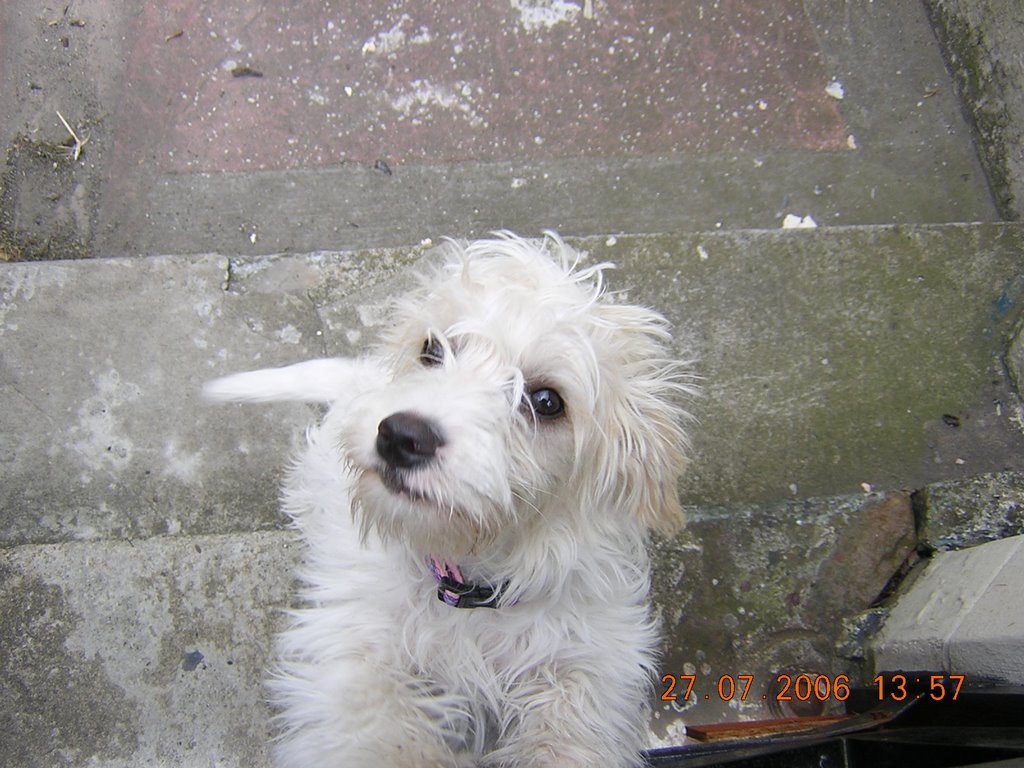


Youve gone to the shelter and found the perfect puppy, the puppy you and your family just have to have and now have the need to take care of your new puppy at home. Or, your female dog has had a beautiful litter of puppies but for some reason or another is not nursing them.

Do these scenarios sound familiar? If so, or if youve found yourself in a situation where you have a puppy that cannot be nursed the natural way, you are going to have to feed him or her by hand. The most effective means for accomplishing this is via bottle feeding.

When you first take on the task of bottle feeding a puppy it is extremely important to remember that the younger your puppy is, the more often you are going to have to feed him or her. During the puppies first two or three days of age you will need to bottle feed approximately once every two hours and for the rest of the first week a minimum of once every three hours.

After the first week your puppy is going to need to be fed at least five or six times per day. As puppies get older the frequency with which you will need to hold a bottle feeding session will decline.

Youre first order of importance when considering to bottle feed a puppy, or making the preparations to do so, that what you feed him or her is nutritionally balanced to fit the puppies needs. There are a number of puppy milk formulas on the market that will take the guesswork out of mixing your own formula, three of the most common are: Esbilac, Puppylac and Hartz Advanced Care Puppy Milk Replacement.

Now that youve determined what youre going to feed your puppy, you need to have a bottle to actually perform the task of feeding. Most veterinary clinics, pet stores and pet departments in larger department stores will have bottles specifically designed for nursing puppies. If you are unable to procure an actually puppy nursing bottle you can substitute a human infant bottle equipped with a preemie nipple.

The actual bottle feeding process is really quite simple. First mix the formula and be sure that it is mixed well and without clumps as otherwise will cause the formulas nutrients to not be dispersed well and also bottle nipple will plug. While the formula is cooling to room temperature make sure you puppy is lying on his or her belly.

Gently insert the nipple into the puppys mouth. If youre puppy doesnt take the nipple directly let a small drop fall on his or her mouth and with an extremely gentle prying motion open your puppies mouth and insert the nipple that way. Once the nipple is in place your puppy should take to the nipple and begin sucking naturally.

Be careful to not overfeed your puppy, play it safe and allow them to only drink a little less than they desire. Overfeeding can result in a number issues that can be detrimental to your puppies health that may require veterinary assistance to correct. It is always better to feed a lesser amount but increase the frequency of feeding sessions.

Just as with a human infant, puppies need to be burped too. At the end of a feeding session hold your puppy upright against your shoulder and gently pat his or her back. By doing so you will decrease the likelihood that your puppys belly will bloat and will lower the chances for your puppy to become colicky.


By: MattR


Article Directory: http://www.articledashboard.com


Matt operates the website A Happy Dog  hpp://www.ahappydog.com

Read more

Senin, 20 Juni 2016

Everything you can imagine is real Pablo Picasso

0


"Our truest life is when we are in dreams awake."
-Henry David Thoreau

Read more

WHO do you really want to blame

0

I was in one of my favorite stores yesterday...waiting in line to buy groceries for din-din, and couldnt help overhearing the conversation between one of the cashiers and a customer. As soon as I heard the words "my dog" my ears perked up...Like any predator, my sense of hearing improved once I acknowledged my "prey" - so to speak... 

I guess the customer was buying lots of doggy treats, because the cashier commented about her own dog, and that she loved her dog etc... but that she (the dog) was "naughty" and in the "dog house".... Yes, this is what caught my attention, blaming the dog for something the human probably did in the first place to set the dog up for "failure"... 

From what I heard, and trust me, I didnt listen very long... once I heard the blame-game I shut my ears and diverted to the luscious chocolate display next to me...plus, I saw a friend there, who happens to be a former student of both my private and Manners class. Anyway, she arrived at the perfect time. We started chatting away, which was a great diversion for me. 

What was being said you ask? I guess the cashier and her boyfriend left a pile of food out on the counter at their home... including a pizza... Well, counter-surfing is a grande game to be played by any animal, especially dogs (and husbands when freshly baked cookies are sitting out)... Not only can dogs jump up on counters easily - or stretch and put their paws up...theyre also quite efficient at using their mouths and paws, pulling items onto the floor to be devoured. Especially when the said item is a freakin pizza!!! YUM! What a HUGE payoff!!! 

So, come on!! Really? Blame the dog? Really? Hmm... I myself applaud the dog for being so resourceful and clever, and for hopefully teaching those humans a lesson about "puppy proofing" their home... I say put the humans in the dog house for being naughty... Oh, and by the way, as much as I hate to admit it, being the professional that I am, its happened to me too! Yep, me, the one who teaches everyone else about dogs... My own dog Poncho taught my husband and myself about puppy proofing out home! Lets just say were much more careful about where we leave food, especially when were preoccupied with each other :-) These animals learned!

Read more

Rabu, 15 Juni 2016

Dog Training and Behavior Terms Defined What do you mean by that

0

If you know about me, this lil ol certified pet dog trainer of The Inquisitive Canine here in Ventura, then you know I prefer to sit in the "science camp" of dog training. Im usually pretty cautious when throwing around the science jargon, but if youve ever taken my dog training classes, dog training workshops, or have had me consult with you for private dog training, then a few of the behavior specific expressions may have come out. 

The waters can get muddy sometimes. So what Id like to do is define some of the widely used, more popular, dog training language that is currently being heard more frequently, but in laymans terms. Along with the definition, if appropriate, Ill throw in a human analogy as well. I have found that this helps us humans relate better to our pet dogs. 
  • Aversive: Anything an animal considers ‘bad’ - anything unpleasant, painful, annoying, uncomfortable. A strong dislike or disinclination; tending to avoid or causing avoidance of a noxious or punishing stimulus. e.g: Shouting, hitting, ignoring, jerking with the leash, squirt bottles, applying pain intentionally, grabbing, restraining, noxious sprays, and electric shock
  • Behavior: the way in which one acts or conducts oneself. Any action performed that can be observed and measured. e.g: Your dog resting in their bed
  • Bridge: AKA ‘bridging stimulus’ or ‘marker’ A stimulus (something an animal sees, hears, feels) that pinpoints the exact moment in time an action of a desired behavior was performed - bridging the gap between the time the signal was given and the delivery of a reward is provided. e.g: The ‘click’ of a clicker, the sound of a whistle. 
  • Classical Conditioning: AKA: ‘ Respondent Conditioning’, ‘Pavlovian Conditioning’ 
  1. A learning process that occurs when two stimuli are repeatedly paired: a response that is at first elicited by the second stimulus is eventually elicited by the first stimulus alone. 
  2. Conditioning in which the conditioned stimulus (as the sound of a bell) is paired with and precedes the unconditioned stimulus (as the sight of food) until the conditioned stimulus alone is sufficient to elicit the response (as salivation in a dog) 
  • Conditioning: Learning. *Observe your dogs behavior. If their behavior changes, learning is taking place. 
  • Consequence: An action or event that occurs after a behavior. It can affect how often that behavior will occur again in the future. 
  • Counter-conditioning: Taking a fear-provoking event, which is associated with an unpleasant situation, and changing (countering or reversing) the association to one that predicts something pleasant. Reversal the learned response. Often used in conjunction with desensitization. 
  • Cue: A signal which will elicit a specific behavior or reflex. e.g: Saying "sit" or using hand signal for "sit". 
  • Desensitization: Process where normal defense reactions elicited by an aversive stimulus, such as shock, are modified by creating pleasant associations with a positive reinforcer. This is achieved by presenting the fear-provoking event (stimulus) at levels low enough not to cause a reaction, but enough for the animal to notice, while pairing this event (stimulus) with something the animal loves causing the feelings to be reversed. Levels of intensity are gradually increased, as long as the animal stays below the fear-provoking level of intensity. Used in conjunction with counter-conditioning
  • Discrimination: The ability to differentiate between to similar competing stimuli. The ability to perceive differences in various aspects of the environment. 
  • Flooding: AKA: Exposure "Response Prevention." An extinction process used to treat anxiety and fear-related disorders. Animal is exposed to specific anxiety producing stimulus at levels high enough until the animal no longer reacts. Intention of this treatment is for animal to relearn coping skills when exposed to stimulus, however this is considered amongst many to be cruel and unethical, and often doesnt work, depending upon the animal, and what the anxiety producing stimulus is. 
  • Generalization: The process of comparing events, consequences or objects which have some trait in common and recognizing those commonalities between them. The tendency to respond to a class of stimuli rather than only to the one to which the animal was originally conditioned to. Make for wide general use or application. e.g: Dog can perform the same behavior in any setting when asked to do so without having to relearn.
  • Habituation: the diminishing of a physiological or emotional response to a frequently repeated stimulus. The relatively persistent fading of a response as a result of repeated stimulation which is not followed by any specific reinforcement. AKA: Passive Desensitization.
  • Instinct: An inborn predisposition to behave in a specific way when appropriately stimulated. Instincts are species specific complex behaviors. They are natural and unconditioned qualities shared by all members of a species. e.g. dogs chasing things, guarding their bones, digging, chewing, jumping up to greet. 
  • Learned Helplessness: A condition created by exposure to inescapable aversive events. This can lead to delayed or prevention of learning in subsequent situations in which escape or avoidance is possible. When a human or animal ‘gives up’, and stops trying due to multiple failed attempts at trying to control a situation. e.g. dog sits politely at all times because the alternate might risk "getting in trouble" by owner. 
  • Learning: the acquisition of knowledge or skills through experience, practice, or study, or by being taught. The process in which relatively permanent changes in behavior are produced through experience and memories.
  • Lure: Something that motivates or is used to motivate a person or animal to do something.
  • Motivation: A general term referring to the forces regulating behavior that is undertaken because of instinctual drives, needs, desires, and is directed towards a goal. One factor that can influence whether or not a learned behavior will be performed. Animal needs to be motivated in some way to perform a specific behavior - either from others, or from within. e.g. for dogs: petting, praise, attention, toys, games, tug, food playing with other dogs. 
  • Negative punishment: In operant conditioning, the removal of something an animal wants.  e.g. Dog jumps on person to say ‘hello’ - person turns their back and ignores dog.
  • Negative reinforcement: In operant conditioning, the removal of something an animal finds unpleasant, as an immediate result of the desired behavior performed. e.g. Pull up on choke collar until dog sits butt on ground, choke collar released. Pinning dog on back until dog relaxes and "submits." In both examples its the release of the choke chain, or allowing the dog to get up after pinning. 
  • Operant Conditioning: AKA ‘Instrumental Conditioning’, ‘Skinnerian Conditioning’. The fundamental principle of operant conditioning is: behavior is determined by its consequences. A form of learning in which something the animal finds pleasant or unpleasant is presented or removed, thus altering the rate at which the behavior is performed. 
  • Positive Punishment: In operant conditioning, the addition of an aversive stimulus, or something an animal seeks to avoid, that is found within the animals environment, following a behavior, with the intention of decreasing the frequency of that behavior. e.g. dog eliminates on carpet, dog get smacked. Owner pinning dog in order to "take control." 
  • Positive Reinforcement: In operant conditioning, an event or stimulus provided following a specific behavior with the intention of increasing the frequency of that behavior. A positive reinforcer is something the animal desires or finds pleasant. e.g. dog sits, get treat for sitting, dog continues to sit because it predict treats. 
  • Reinforce: Strengthen or support an existing feeling, idea, or habit. 
  • Reinforcer: Anything that increases the frequency of the behavior it immediately follows. 
  • Reinforcement: The event which increases the frequency of the behavior it follows. 
  • Reward: Anything the dog considers ‘good’- stimulates at least one of the five senses - sight, smell, taste, touch, sound. Anything the dog finds motivating and reinforcing - can be: food, toys, praise, touch, freedom. e.g. belly-rub, rousing game of fetch, comfy bed, something stinky to roll in, kissy-face with family members, liver treat. A return that is obtained upon the successful performance of a task. 
  • Reward-based training program: Using anything an animal finds appealing and ‘rewarding’ to elicit, reinforce, or inhibit behaviors. 
  • Sensitization: Intensifying of an animals response to stimuli that did not originally produce such strong feelings. 
  • Shaping: A method of modifying behavior. The entire process of selectively reinforcing responses in successive steps towards the goal of a desired response. Based on principles of operant conditioning in which an animals behavior is gradually molded to specific desired patterns through the delivery of positive reinforcement at distinct moments. 

Selasa, 14 Juni 2016

Helpful ideas to get you going

0


Part of the responsibility of pet ownership includes making sure your dog is well-trained. Dogs who are well trained tend to be happier. They know what to expect and when to expect it. This also provides a safer environment for you, the dog, and your neighbors. You can work with your dog on your own, or get the help of a trainer. Here are some helpful ideas to get you going.

If you want success in training your dog, you must make sure that your dog has a good activity level throughout his life. Dogs are not sedentary animals by nature. They have a great need for movement and exercise in their daily routine. At an agility class you can teach your dog to catch a Frisbee while your dog gets the exercise he or she needs. You could also let your dog tag along on your brisk walk or run. Try not to let boredom set in with your dog by keeping him active as much as possible.


 If you want to be sure you are successful in your dog training efforts, it is vital that you keep your dog active throughout its life. Dogs were not meant to lay around all day. To keep them happy and healthy, they have to run around or do a job. Try enrolling in an agility course, going for a run, or practicing Frisbee skills with your dog. It is best to make sure your dog is moving just as much as possible and does not get bored.

 Ensure that your dog gets enough activity. Dogs get bored just as easily as children. When dogs are bored they are difficult to train. Your dog needs proper exercise to function to his highest potential. Regularly take a walk or run with your dog.

 If hiring an animal behavior professional is something you are considering, make sure to learn as much about them as you can. Also it is important to find out is their chosen methods for animal training. You may not be comfortable with some techniques and you can request that they not be used with your dog.

 A harness is less bothersome to your dog, but also prevents you from exercising control when you need to do so. Keep your dog on his harness, but also use your cinching collar. Tug on his collar when its absolutely necessary, and your dog will soon learn how to obey wearing the harness alone.

 Your dog should not get a cold voice from you because of a personal conflict with another human or the fact you got stuck in traffic. Remember: if your dog has not done something wrong immediately beforehand, your interactions should always be positive.

 Prepare your dog early on for veterinary examinations. Press your hands firmly over his body in the same manner that the vet will and offer him encouraging praise. Practice handling both paw and teeth exams, by examining between the paw pads and lifting the dogs jowls. You might want to ask your buddies to assist you in the process.

 Though you want to train your dog well, sometimes obedience classes are necessary. Obedience classes provide you with plenty of tips to deal with a variety of problems you may face with your dog.

 When you begin training your dog, you should be aware of what his favorite foods are. Since these will be the rewards for good behavior when you are training the dog, it should be something that really motivates him. Take note of how your dog responds when he is given his reward.

 You may have to consult a professional when training your dog. When your dog training is going poorly, a professional can help out. A dog trainer can be invaluable in pointing out where the issues are occurring, and they can also put you back onto the right track.

 Treats are great rewards, but you need to find other positive reinforcements for training. Remember, that dog treats are one way to reward a dog for desired behavior. However, you may not always have a treat with you to congratulate you dog outside of regular training sessions. Giving your dog physical attention and praise will reinforce his positive behavior, as well as save you money and him calories.

 When you are adding a pet to your family, make sure that it is introduced slowly to existing pets. Dont adopt a new pet without considering the temperament of your current pet or pets. To make introductions go as smooth as possible, when you are choosing the new addition, try to find a personality that will complement that of your current pet.

 The simplest way to prevent a dog-in-training from destroying all your stuff is to put him outside when you arent present. If it is too cold out, or you cant leave the puppy outdoors for some other reason, you will just have to do your best to make his favorite objects out of reach. Leave him in one room with the door closed, and leave him some toys that are okay to chew on.

 Its important to use treats that really capture your dogs full attention when training. This is one time you can use something you would not usually give them, like meat.

 In order to be successful at dog training, you need to understand what motivates your dog. You are learning all aspects about your dog, his likes and dislikes, and what is effective and ineffective. He will expect love and positive reinforcement from you. He enjoys training and will respond to your leadership and patience. Happy dogs tend to perform better, and are easier to train successfully.

 A new dog requires teaching proper obedience training right from the beginning. It is much easier to get a dog to learn the right way rather than making it unlearn its bad habits. If you never give your dog any scraps from table food, they will never start begging for it.

 Ensure that your dog gets plenty of exercise and stimulation. Dogs require mental stimulation to stay happy and healthy. Dogs with no enthusiasm will be harder to train than active dogs. If you have a happy, exercised dog, they will listen better. A long walk or a brisk run are great ways to get rid of some of your dogs excess energy.

 If you are welcoming a guest into your home, give them clear instructions about how to interact with your dog. Keeping calm, and introducing themselves to your dog, may help reduce any negative behaviors that another approach would cause.

 Whenever you want your dogs attention, use its name. You will not be able to control your dog if you do not get his attention first. Practice calling your dogs name and letting him respond at least tens times a day. Also, it is very inappropriate for you to call the dog over to you and then punish him, as this will teach him to fear you and discourage him from coming when called.

 Always use your dogs name when you need his attention. To have some good control over your dog, a solid response is crucial. Call them to you at least ten times a day. Try to avoid punishing your dog when it comes to you after you call out its name while using this technique.

 This article should have given you some valuable information for training your dog. Keeping these tips in mind when you start training your dog can help you become a very happy dog owner.

Read more

Rabu, 08 Juni 2016

You CAN teach an old dog man new tricks!

0

Okay, let me first say hes NOT OLD! My "man" that is... But, he can learn new things... Yep, three years after becoming a trainer and establishing The Inquisitive Canine, a year and a half since opening the studio...and my own husband, father of our dog, love of my life, supporter of all I get into, has finally signed up for one of my classes with our dog Poncho! I couldnt believe it... but he said he finally believes that 1) the training does work, and 2) he needs to learn some of these techniques so Poncho will perform the same behaviors with him as he does with me. 

For years Ive said that dogs dont generalize (perform same behavior in similar situations) - and that we need to re-teach them in any new situation. A new place, person (different person training), situation etc... you have to re-teach the dog...its as simple as that. Im not too sure what finally sent my hubby over the edge of not being convinced to actually "believing", but Im thrilled hes finally there! And that he is excited about coming to class and learning... He even filled out his goal sheet and is reading through his workbook! 

I have to say, this has made my day - and is SO rewarding to me! I love how we positively reinforce one another - makes for a great relationship... Now Id better go catch him in the act of doing what I love and reward him for it! (husband and the dog)... 

Read more

Do you have a hyperactive dog

0

Read more

Rabu, 01 Juni 2016

How To Train Your Puppy The Right Way – Introducing Your Puppy To Your Home And Family

0

Puppy training is very important, whether you are training your first puppy or your 20th. Properly training and socializing a puppy is vital to making it a valued member of your family and your community.


In some ways training a puppy is easier than training an adult or adolescent dog. One reason is that the puppy is essentially a "blank slate", untroubled by past training techniques and other issues. In other ways, however, the puppy can be more difficult to train than an older dog.


One challenge to training a new puppy is that puppies are more easily distractible than adolescent and adult dogs. Everything is new to a puppy, and every new experience provides a new chance for distraction. For this reason, it is best to keep training sessions short when working with a puppy, and to end each training sessions on a positive note.


It is also important to allow the puppy plenty of time to play, and to interact with other puppies and dogs. Socialization training is vital to making your new puppy a good canine citizen, as dog aggression is a growing problem in many areas. A properly socialized dog learns how to play properly with other dogs, and overly aggressive play is punished by the other dogs in the play group.


This type of play learning is something that happens among siblings in litters of puppies. As the puppies play with each other, they learn what is appropriate and what is not. Inappropriate behavior, such as hard biting or scratching, is punished by the other puppies, by the mother dog, or both.


Unfortunately, many puppies are removed from their mothers and sold or adopted before this socialization has fully occurred. Therefore, puppy play sessions are a very important part of any puppy training session. Most good puppy preschool training programs provide time in each session for this type of dog interaction.


Introducing your puppy to new experiences and new locations is also an important part of puppy training. Teaching your dog to be obedient and responsive, even in the face of many distractions, is very important when training dogs and puppies.


It is important for puppy owners to structure their pets environment so that the puppy is rewarded for good behaviors and not rewarded for others. One good example of this is jumping on people. Many people inadvertently reward this behavior because it can be cute. While it is true that jumping can be cute for a 10 pound puppy, it will not be so cute when that puppy has grown into a 100 pound dog.


Instead of rewarding the puppy for jumping, try rewarding it for sitting instead. This type of positive reinforcement will result in a well behaved adult dog that is a valued member of both the family and the community at large.


This type of reinforcement can also be used in potty training the new puppy. For instance, teaching a puppy to use a unique surface such as gravel or asphalt is a good technique. The theory is that the puppy will associate this surface with going potty, and therefore be reluctant to use other surfaces (like your kitchen carpet for instance) as a potty.


Copyright Jonathan Cheong - http://www.absolute-dog-training.com


Written by: Jonathan Cheong

Read more

Jumat, 20 Mei 2016

Determining The Right Dog Training Strategy For You

0


Properly training your dog will allow you to coexist with ease and become best pals. When your dog is well-trained, then both you and your dog will know exactly what is expected from each other. You will not have to worry about leaving him home along or taking him to public places. Though it might seem like a difficult task, you and your dog will have many rewarding times together, sharing the tricks and companionship that youve come to know through the dog training sessions.

Big dogs will need a large bed or sleeping area. Plenty of pet brands make dog beds sized for larger breeds. A crib mattress is also a viable alternative. A crib mattress is also an easy to care for alternative to a dog bed because the sheets can be changed regularly with little fuss. Theyre waterproof, too!


 Do your best to keep your dog active through the day. Dogs can easily become bored. Dogs with no enthusiasm will be harder to train than active dogs. It is easier for your dog to focus if he is happy and well exercised. Bring your dog along when you walk or jog.

 Dogs need to be taught the right habits as soon as they are brought to your home. Your dog should learn the right ways of doing things instead of developing bad habits that will need to be corrected later on. If you never give your dog any scraps from table food, they will never start begging for it.

 You cant stop your dog from being a dog, so make sure to give him proper ways to act like a dog. There should always be good outlets available for your dog to exercise and keep busy, and do not forget the right diet to provide this energy.

 Here are a few ways to make crate training more positive for your dog. If the dog doesnt want to go inside the crate, put a rawhide bone in there and shut the door. A tempting bone will prove too hard to resist, and the dog will be panting to get into the crate in no time. Upon entering the crate, praise your puppy to make sure it knows it did a good job.

 Get your dog used to the things they will encounter when going for a vet visit. Touch your dog gently down the sides of his body and tell him he is being good when he does not react. You will want to get him ready to tolerate the doctor touching his mouth and paws. Your friends may be able to help you out, too.

 Be consistent with the words you use when trying to teach your dog a new behavior. This causes a strong association between a word and an action in your dogs mind. It is essential not to confuse your dog with commands that are not the same every single time. Your success rate in training your pet will be higher if you follow these guidelines.

 Keeping your dog active is an important part of successful dog training and is also good for their health. Dogs, like people, shouldnt be sedentary. Running, playing and constructive exercise are all essential components of their health and happiness. Make sure your dog gets plenty of walks; play with it at the park, or even look into enrolling it in an agility class. It is best to make sure your dog is moving just as much as possible and does not get bored.

 Understand when you cant handle your dog on your own, and use that knowledge to know when you need to call in a professional to help you. It may be necessary to seek professional assistance if your dog training is not proceeding as you expected it to. Your trainer will pinpoint the problem areas and point you in the right direction.

 Your dog should know the difference between right and wrong at all times. This means everyone living in the house needs to enforce the boundaries you set. This will undo all your training!

 Give them chew toys for pain relief while teething, and keep everything else out of reach. Immediately replace the object with one of the intended chew toys. If your puppy needs to chew because he is teething, try a frozen washcloth.

 You should be constantly challenging your dog and re-teaching it the tricks youve previously taught it. Throw "pop quizzes" occasionally to be sure he is not getting out of practice.

 If hiring an animal behavior professional is something you are considering, make sure to learn as much about them as you can. Animal behavior professionals have differing opinions on what correctly training a dog entails, so you should make sure that your trainer is in line with your own ideology before using their techniques with your dog!

 Although there are many benefits to using a harness, you will have less control over your dog than if he is wearing a cinch collar. Use a collar and a harness at the same time to make your dog understands that the harness means he must obey you as well.

 Be sure to feed your dog healthy foods and treats. If the dogs diet is poor, it is not good for their health. If your dog isnt getting what it needs to stay healthy, it could really struggle to find the energy for training or may act out in other ways. Training may very well go easier when dogs are given the proper nutrients in a healthful diet.

 If you will be away from home for any length of time, such as going to work, then you need to make certain you take your dog on a long walk before you leave. Not only do you want your dog to relieve himself, but you also want to make him tired so he relaxes and doesnt suffer from anxiety while youre gone.

Read more

Rabu, 11 Mei 2016

Simple Steps Dog Knows To Obey You

0


Aggressive behaviors, excessive barking and general disobedience are annoying to a dog owner. These bad habits can be changed. While it might not be possible to completely eliminate these behaviors, applying the advice in this article will still train the dog to a large degree. With dedicated effort, it is possible to transform any dog into a perfect pet.

To have success in dog training, you need to be able to control it with commands. Put yourself in an authoritative position, so that your dog knows to obey you. For example, when you walk your dog you must be in front and you should insist your dog follows behind you.


 Ideally, training should begin during a dogs puppy years. This isnt always true, but the younger the animal, the more responsive to training he is. If you train your dog when he is young, then he will grow up behaving well.

 Do not let the pressures of your day or life influence how you speak to your dog when you are training. Start the training session with good feelings and expectations. Only correct your dog after he has done something you dont want him to.

 When training your dog, always remember to have fun. Playing with your dog helps build a stronger bond between dog and human, which encourages the dog to respond positively during training. Although dog training can be fun, you dont really want to spend all your time in training mode.

 Always give your dog the tools for success. If you are training it to stop chewing things it shouldnt be chewing on, give it things that it can chew on. Even more so, an inappropriately-chewing dog needs to be protected. Some household items can be harmful to your dog if they are chewed upon.

 Whenever you are teaching a dog a multi-step task, reduce it to a series of smaller tasks. For instance, maybe you are training your dog to fetch the morning paper. You first need to teach him exactly what a newspaper is and then how to hold it. He needs to associate the object with a name. From there, proceed to teach him how to pick the paper up without damaging it. Finally, he should learn to bring the object to you. Splitting a complex task into individual tasks is a good strategy, because the smaller tasks are easier to learn. Afterwards, the dog simply needs to learn to do them in the correct order.

 Dogs can concentrate on one thing intensely and you will have to learn to break his attention. If you keep up with his training, your dog will look to you more often for direction rather than looking to the environment.

 Using a crate is an effective way to house train your dog. Let the dog out on a regular schedule to make the crate training most effective. A dog trained in a create will have less accidents with time.

 Consistency is key during your training sessions. Pick a single word or gesture for each command, action or behavior and use it exclusively. Dogs are able to associate repeated words or actions with the requested response. Consistency is essential to training. Establish a short list of vocabulary associated with communicating with your dog.

 Any behavioral issues that suddenly occur should be checked by a vet to make sure there are no health conditions causing it. Certain health conditions, or even pain, can completely change an animals demeanor. It could even be to the point that the dog may become more aggressive and lash out at people. This behavior is an indicator to humans that there is something wrong.

 Consistency is very important when training your dog. Have a set list of commands that everyone in the household knows. Also, make sure to be on the same page regarding rewarding good behavior and never rewarding bad behavior. Different training methods will only confuse your dog and delay training.

 Although a harness is more comfortable for dogs, it does not offer as much control as a cinch-type collar. Using a collar and harness combo and only tugging on his collar when needed can teach your canine that he has to listen while harnessed, too.

 Make sure that your dog has enough sleeping space, especially when the dog is a big one that likes to sprawl. Think about getting your dog an actual dog bed that fits its larger size; crib mattresses work great, too. There are several advantages to doing this since you are able to change the cover with frequency and ease when using fitted sheets. This is also good because mattresses for cribs are waterproof.

 It is vitally important that your dog is treated in the same manner, given the same commands and rewarded similarly by every member of your family. This is the only way to ensure the training sticks. Consistency is the best method for training a dog. If you train your dog in a certain way while another family member encourages a different behavior, your dog will not know what to do.

 There are many different approaches that can be used to crate train a new puppy. Many dogs are intimidated by the crate. To cure this, place something they enjoy in it and shut the door. If a dog sees something in the crate that they want, they will desire to enter it. Praise your dog once he gets into the crate.

 In the majority of instances, dog bites are caused by a biting phobia. The occurrence is frequently due to a dogs anxiety, claustrophobia, or sense that danger is imminent. Train your dog with praise and discipline, not physical force. This could have the unfortunate effect of causing your dog to bite you. If your dog trusts you, he will want to make you happy and look towards you as a leader.

 Have your dog learn to just hold one of his toys in his mouth, instead of chewing on it immediately. When he puts the toy around his mouth, use a training clicker and offer him a treat. After your dog succeeds in mouthing an object a few times, move on to rewarding the dog for picking it up with his mouth. When he does, just click and then give a reward. After that, only give the reward if he does hold the toy in his mouth.

 Just as a human likes to stretch out and lay on their backs, so do dogs. Therefore, it is essential to have a dog bed big enough for your furry friend. There are big, long dog beds around for larger dogs, or you could look for a mattress taken from a crib. This is a convenient and fun alternative because you have the opportunity to change the appearance of the bed and keep it clean by simply putting a new crib sheet on it every few days. The crib mattresses are also waterproof which means they are highly durable.

 You can prevent your dog from destroying your home by keeping it outdoors when you are away from the house. When this isnt possible, you want to provide things that both appeal to your dog and that are okay for the dog to chew on. Establishing acceptable chews toys is also about keeping those things you do not want your dog to chew up behind closed doors or well out out of reach.

 Dog owners should now realize how easy the battle to train a dog can be when approached correctly. If the owner has the right mindset and good knowledge, they should be able to train a dog with no problem. It is possible for any dog to fulfill its potential and flourish under the tutelage of its master..

Read more

Tricks you can teach your dog to do

0


It is very common in households around the world to incorporate dogs and other domestic animals into the family home. Puppies, like most baby animals, have mischievous streaks. Read on for some ideas on training your dog.

There are a lot of tricks you can teach your dog to do; a common one is training him to hold a toy in his mouth without chewing it. Use a clicker to give the dog a treat whenever the dogs uses his mouth to hold a toy. After a few tries you should allow the dog to pick up the toy on his own. As soon as the dog does this, use the clicker and give a reward. If he holds it in his mouth, you can give him a reward.


 Inform guests on the proper protocols for interacting with your dog. These kind of things can cause your dog to jump on people or adopt a dominant attitude.

 Disciplined leash walking is very important in dog training. Not only is this safer for the dog and easier on your body, such a frequent activity mandates good self-control and reinforcement of the chain of command from training.

 If you are feeling anxious, or feel like you cant be patient, it is best to not even start a session. Your patience is vital for encouraging the focused attention your dog needs to get the full benefits of training.

 Anxious dogs are prone to chewing on things they shouldnt. If you give the dog a chew toy and put him in the safety of a dog crate, he can occupy himself while youre not at the house.

 Use treats your dog really loves to achieve maximum training efficiency. This might be an extra-special treat that your dog does not ordinarily have the opportunity to enjoy.

 Big dogs need a bed that can accommodate them, especially if they like to stretch and sleep on their back. There are big, long dog beds around for larger dogs, or you could look for a mattress taken from a crib. A crib mattress is also an easy to care for alternative to a dog bed because the sheets can be changed regularly with little fuss. Theyre waterproof, too!

 When considering the possibility of hiring a professional to work with your dog, look into their background, reputation and conduct an in depth interview with them. Many animal behavior specialists have opposing opinions on how to correctly train dogs. Be sure to verify that the trainer you hire has similar ideas as yours, prior to implementing any of their tips.

 Include plenty of physical activity in your dogs training routine. Dogs can easily get bored. A bored dog will try and find something interesting to do, and training is not usually interesting. Keeping your dog exercised and happy will help them pay attention more due to releasing all excess energy that often distracts them from your commands. Go for long walks and runs with your dog.

 Get everyone in your house on the same page regarding dog training. If the dog jumps up and you use "get down" but your husband says "no boy", the dog will get confused. You give your dog a greater chance for success if everyone is on board with using the same words.

 The way dogs learn is by repeating techniques and being rewarded. You need to make sure your dog understands what the expected behavior is, be consistent in your expectations and practice the behaviors daily. This is the correct way for a dog to learn a trick. You have to show them with plenty of repetition and rewards.

 A consistent schedule of feeding and potty-time is very important when house training your dog. By establishing a regular potty-time every day, you will get your dog in the habit of doing his business at the same time daily. Sticking to a schedule will teach your dog how to control himself until his next scheduled potty break.

 Training should be fun for your dog. Only train your dog in ten to fifteen minute sessions. A dog has a limited attention span so any longer will cause him or her to become bored. Be sure to provide rewards often, and give different treats from time to time. You should lavish praises on your dog for following your instructions. The more enjoyable training is for your dog, the more he will look forward to it!

 When it comes to training your dog, never give up. Dogs need consistent reinforcement in what you have taught them so they remember the good behaviors and dont revert back to their old, disobedient ways they had before training. Training never ends. It is an important part of taking care of your dog.

 Limit the duration of training sessions. A long, uninterrupted training period is going to exhaust your dogs attention. Start off with individual training periods of no more than 10 minutes.

 A dog needs to be trained from the outset. The sooner you start training the dog the better, because they have not learned bad habits that you will have to correct. If you never give your dog any scraps from table food, they will never start begging for it.

 If your puppy is caught chewing on something unacceptable, stop him immediately. This will help your puppy understand what is acceptable and what is off limits.

 Dogs that have trouble with separation anxiety need to develop stronger relationships with others in your household. Allowing the dog to establish relationships with new people will lessen its dependence on the owner.

 A clicker works well when training most dogs. Using a clicker is as simple as showing your dog that good things happen when the clicking noise is heard. Try using this technique right away, doing it frequently over a span of a few days. Your dog will soon know that the clicking noise means that they are doing a good job.

 You should be able to have a clean home and a loving dog. While a dog can cause quite a bit of destruction, and make a mess in your home, proper dog training will alleviate most of these issues. Take advantage of the tips mentioned here, and you will be rewarded with a peaceful environment and a loving dog..

Read more

Before You Adopt A Dog Questions to ask yourself

0

I met with Sharon of the Canine Adoption and Rescue League (CARL) today. I wanted to discuss the possibility of offering a complementary talk for potential adopters, as well as those who have newly adopted a puppy or adult dog. Good news! She loved the idea! 

Its going to be a 75 minute talk over at the Adoption Center (behind the Ventura Pet Barn), held on the third Saturday of each month. I begin August 15th! I will be going over the ever important pre-adoptions questions surrounding the "Why?" and the post-adoption topics of "Yikes! Now what to I do?" 

These are a few of the topics I will be discussing, and inspiring people to ask themselves:
  • Why do I want a dog?
  • Is this the best time in my life to get a dog?
  • Are there any foreseeable life-changing events that may occur?
  • Can I afford to keep a dog, for its lifetime?
  • What type of dog do I want? 
  • Am I more concerned with breed or temperament?
If youre considering adopting a dog, or know someone who is, you may want to come by on August 15th and check it out. Ask questions? Of if youve adopted a dog and need help with behavior issues, or maybe just want some general information about making life better with each other, please come by. This talk is free to the public, although donations to CARL are always welcome. 

Read more

Sabtu, 07 Mei 2016

Do You Want your Puppy here

0

Ccan you imagine how your children would feel seeing both themselves and their puppies on-line. Well you can. Just send me their photoes and I will add them to this site for the whole world to see. Post them to me Denis Kermode at denis@tarotservices.com  and I will post them on this blog giving full credits. Why not let me know a little about your puppy as well perhaps the problems you are having or just the joy it is bringing into your life. This is why we are here, to share the moments a new puppy brings us.

Read more

Kamis, 05 Mei 2016

Dressing Dogs Up Borderline animal abuse Not if you make it fun!

0

I just read a question posted to a reporter news feed about wanting opinions from animal professionals on the topic of dressing dogs up... Okay, so this just happened to fall on the birthday of my beautiful, handsome, lovely, love of my life, baby boy Poncho! Of ALL days! Why today??? Today is one of those days Im going wear my "dog mom" hat - not my professional certified pet dog trainer, dog behavior counselor hat! 

Whats my opinion? Hmm, my usual m.o. is to change up his collar...I admit, Poncho the dog has quite a few to choose from. I switch his license and ID tag to whichever he ends up wearing. As I tell my dog training class and private dog training clients, one key element in being a responsible pet owner: "Your dogs collar is similar to our wallet. Its used for carrying ID and license. Other than that it can be used for a fashion statement, personality statement, or to match your outfit." It shouldnt be used for "training" (like those nasty aversive training methods using collar correction). 

As for other "outfits"? Yes, Poncho has various sweaters, t-shirts, a couple of vests/jackets... and the ever popular lobster costume he wears at Halloween, the hawaiian lei I have him wear many times throughout the year...we do live in Ventura, which is a beach town. Besides the annual Halloween event, all of his clothes are more about function...if its cold out. Oops, wait a minute...some of his t-shirts are more about statements I want to make...like when he goes to races with me. Poncho is one of my running partners, and he likes to brag about that. 

This specific reporter asked the question: "Other than essential winter coats, do dogs generally hate having to wear people clothes, and is it cruel to dress dogs up?"

My answer to that: I have no idea what theyre thinking. Therefore Im not sure if they hate it or not. I know that when I dress Poncho in clothing that hes not used to, like his fuzzy green birthday hat, or lobster costume, I head down the "creating pleasant associations" path, and feed him little bits of yummy high-value treats while hes wearing them. This way, hell learn to love the outfits! Classical conditioning is a wonderful thing! 

As for the latter part of the question, "Is it cruel?" That all depends upon the motivation of whomever is dressing the dog up. If the person is intending to hurt, humiliate (intentionally), bully, coerce, or intimidate the dog in question, then "yes" I do think its cruel. If the person is doing it to have fun, provide love, attention, and steak for their dog, then why not? Just like when my parents dressed me in striped pants and paisley shirts - they werent cruel, it was the 70s. 

Read more

HAVE YOU CHOOSEN THE RIGHT COLLAR FOR YOUR PUPPY

0

HAVE YOU CHOOSEN THE RIGHT

COLLAR FOR YOUR PUPPY

If you are just teaching your dog or passing on an individuality to it, dog collars and straps represent a vital role. Dog collars are available in a selection of forms, dimensions and fashions, and are much of a style statement these days. A dog collar may well be a reprieve for your puppy if, God forbid, it runs away from your home.

With such an extensive selection of dog collars to be had, opting for the appropriate one for your puppy can be to a certain extent nerve racking. The collar ought to be chosen depending upon your choices and your puppy’s behavior. For a rather docile puppy, a collar made up of soft cloth is fairly suitable. On the other hand, a stubborn puppy has to be restricted by a fast jerk of a spiked collar. A dog trainer may give you a hand in making the appropriate selection of a dog collar for your loyal canine buddy.

The buckle range is mainly the regular sort of dog collar. A broad selection of cloth may be used to make up a buckle collar, featuring a variety of colors and designs. Your puppy’s name may be stitched on top of the collar for recognition reasons. Buckle collar is made up of a sequence of spaced holes, and the buckle is fixed firmly to arrive at the desired size.

Buckle collar is the most standard type, which can be improved to make sure of additional protection for the puppy. For example, breakaway collars are planned to pull to pieces under excessive trauma. A few collar styles are set with discharge flaps that make sure of a quick taking away of the collar, comparative to the usual buckle style. Such differences may perhaps help out to avoid your puppy from gasping in unexpected state of affairs.

One more collar style is a prong collar, which is fairly of assistance if your puppy is to a certain extent stiff and usually pulls hard while on leash. A prong collar has vertical metal prongs that are spaced in an even way in the region of the inside of the collar. Upon tugging the attached strap, the prongs poke your puppys neck, in this manner slowing down its disorderly actions. The expression "prong collar" does sound as a bit unsafe for your canine. Nevertheless, when used properly, prong collars by no means cause any harm to the puppy, and are a great deal safer than even other styles of dog collars.

Read more

Kamis, 21 April 2016

Counting Calories For Your Dog

0

Counting Calories

For Your Dog

There’s a very good chance that your dog may be overweight and you don’t know it! Did you know that the number on canine health disorder is obesity? According to reports from many veterinarians, as many as 25%-44% of all dogs are overweight but it could be even more. If a dog weighs more than 15% than what is the average for the particular dog’s height, he is obese.

It’s no surprise that conditions related to obesity are on the rise. These conditions include diabetes mellitus and orthopedic, musculoskeletal, cardiovascular, gastrointestinal, endocrine, respiratory, immune, and reproductive disorders. All of which are devastating conditions for a dog to have.

Who’s to blame? Well, according to most doctors, obesity is on the rise because of the lack of fussiness of dogs, their natural gorging behavior, and insufficient exercise.

A prevailing ignorance of providing a nutritious, well-balanced diet with a controlled calorie intake is also to blame.

Is your dog fit or fat? Do you your dog’s daily caloric requirements and what factors may diminish those requirements?

Here’s something I bet you didn’t know. Commercial dog food is packed with sugar and fat to make the “ingredients” they put in appetizing.

Don’t use a dog’s begging behavior as a gauge on how much to feed him. Healthy dogs are ready to eat all the time and some can quite literally eat while flat on their side and just about asleep.

Keeping your dog trim and healthy is knowing how many calories he needs and how that translates into food. Your dog’s energy needs constantly change throughout his life. As he becomes more active, it will increase and as he gets older it will decrease.

Individual metabolism, exercise, age, environment and overall health will determine what your dog really needs to remain lean and healthy. Since your dog can only have so many calories every day, it is important to pack lots of nutrition, bulk and appeal into those calories.

In order to determine what your dog to remain lean and healthy, you must take into account his age, environment, exercise, metabolism, and overall health. It’s imperative that since your dog can only have so many calories per day, that those calories be packed with as much nutrition, mass, and appeal as possible.

Do you want to learn some great homemade dog food recipes that could help increase your dog’s lifespan by almost 134%?! Find out which Premium" dog foods to avoid if you do decide to buy commercial dog food.

Get FREE recipes and more here http://homemaderecipes-dogfood.blogspot.com/

Article Source: http://EzineArticles.com/?expert=Del_Hiestand

Read more

Jumat, 15 April 2016

Adult dog mentors Raising a puppy

0

Having your puppy around sound adult dog mentors is a great way for puppies to learn the skills of living in a modern world. This does not mean, letting the adult dog correct the puppy constantly, but instead setting the puppy up to succeed in the presence of the adult dog by reinforcing calm choices and preventing the puppy from practicing undesirable behavior. A lot of puppy classes focus on puppies learning to learn from other puppies, and this can lead to some unwanted behaviors- like over excited play, or no impulse control around other dogs, etc, so make sure your puppy has some adult dog mentors as well as playmates!

Read more

Kamis, 14 April 2016

Its all in how you look at it training versus a chore

0

Heres a question (or two) for all of you dog folks out there:

Do you exercise with your dog? Do you look at walking your dog as a chore? or something fun to do together...? A nice break in the day if you will...

I realized that just like me and my running, setting a goal is a great way to stay motivated. I looked around for a dog-friendly race so Poncho and I could go together, and lucky for us we found a few... Thank you Santa Barbara Athletic Association! So now Im not only taking Poncho for walkies, but were actually in training! At least thats how Im looking at it... 

I wonder if that "Moms in Motion" group will start a sub-group called "Dog Moms in Motion"? Ive asked... and have been ignored... bummer... I bet theyd get a lot more people signing up!

What are your goals with your pets when it comes to "exercise"?

Read more

Sabtu, 09 April 2016

Tips For Training Older Dogs

0

Almost universally, when people talk about dog training, or dog obedience coaching or whatever other phrase they use for it, they have in the back of their mind an image of working with a young dog, often not much more than a puppy.


And, again, its a widely held belief that you can’t teach an old dog new tricks. So, how true is that? Is it possible to train an older dog?


Well, yes and no!


The cliché mongers are partly right, because a more mature animal does need a heck of a lot more training and dedication from the person involved than a younger dog will. This is primarily because dogs are, to a large extent, like people, and by the time they are grown, they are much more “set” in their ways.
A more mature animal will certainly have gone through, and possibly way past, that crucial period in his or her life when what they are learning will have any profound changing influence on their future behavior. In basic terms, and again you can make a direct comparison to mankind, your dog is already of the formed opinion that it knows how to behave and thus, trying to change that perception and belief by attempting to teach him other ways is bound to require a great deal of both time and effort.


Whilst it is certainly not impossible to convince the older dog that new tricks do have some merit, you must accept from the outset that you simply cannot train an old dog in the same way that you would train a puppy.


You definitely have to learn to be a little bit stricter with an older dog simply because he has a good deal more native intelligence than a puppy and he also knows how to drive you crazy!


So, how do you train an older dog? Well, not only do you have to be a bit stricter, but you have to be a good deal more cunning as well! In the same way that the more mature canine is a good deal more cunning than his younger siblings, you have to be the same!


Get him convinced that your ideas are really his ideas, or, make him believe that everything he does was his idea in the first place, and he will be far more likely do something whatever it is you ask!


For example, if he goes to sit down of his own accord, say "sit" and then praise him!


Thus, he believes that it was his idea and after a while, if you just keep on repeating the methodology, eventually you will have him sitting on command.
This system will work for many of the necessary commands, like, come, stay, fetch and heel.


Now, of course, this is, by nature a broad generalization and, as all pet owners are only too aware, not all animals are the same, or learn at the same pace. So, you might find that your particular more mature pet is wonderfully easy to train. On the other hand, some dogs have a wide streak of stubbornness which will mean that they are much more resistant to change and thus, they are more difficult to train, irregardless of what you do.


Nevertheless, even an older dog must be trained to your ways in order that any acquired or indeed natural bad habits are broken and banished.


Although you may find it hard to believe, if he could speak, your dog would probably thank you for it in the end, simply because the less tension there is between dog and owner, the happier and more calm the relationship will be, to the obvious benefit of both parties!


But, do not carry any "rosy colored" illusions! It is important that you face the fact that training a more mature dog could be a grueling and thankless task at times.


It is therefore vitally important that you try to make it as much fun as possible. You could start by joining a dog training or obedience class (contrary to popular belief, they are not just for "puppy people") and dont hesitate to gather as much support as possible from family and friends. Perhaps you could afford to invest in some good quality, durable training products like toys and treats, but, remember, your dog is more mature and intelligent, so try to pick toys that will challenge and stimulate him.


Whatever you do, the only certainty is that, however long it might take, once you’ve managed to teach your older dog everything it is necessary for him to know, the bond between you will become unbreakable, and the pleasure that you both get from such a relationship will remain a wonderful constant over the years.


Article Directory: http://www.articledashboard.com
Steve Cowan is an Asia based entrepreneur who runs the leading “Self Help” audiobook site at www.talkalive.com and compiles a blog offering a wide diversity of reviews at www.webbiz99.com

Read more

Senin, 04 April 2016

Thank You Social Media Making it easier to find this dog trainer

0

Wow, after wrapping up my Social Media Marketing class last night at UCSB extension with the Wild Web Women, I realized that I now have so many social media platforms, that I was starting to become a bit scatter-brained. So, since my new round of dog training classes is beginning this Sunday April 19th, I thought, what a great time to put together a list of how to find me! So, here it is! I took liberty of adding Ponchos info too...he likes to make himself available also. 


Official IC Website: http://inquisitivecanine.com/

  • For information on services, schedules, events, where to contact us, FAQ’s. 
  • A little about Joan and the Inquisitive Canine, our approach, methodology. 

Joan’s Blog: http://dogtrainingventura.blogspot.com

  • For dog training tips (from the human perspective)
  • Information on upcoming events, including those outside the Inquisitive Canine
  • Commentary on the latest and greatest social topics
  • An all around fun place to share with the community
  • The perfect place for friends, clients, and the general public to make comments! 
  • A great place to send questions! 

Poncho’s Blog: http://ponchosprose.blogspot.com

  • Poncho’s own dog training tips (from the dogs perspective) 
  • Information on events at the Inquisitive Canine, and those elsewhere
  • Commentary on the latest and greatest social topics.
  • The perfect place for friends (human and dog) to make comments or send questions. 


Noozhawk Advice Column: http://www.noozhawk.com/joan_mayer/

  • Dog training and behavior advice column written by both Joan & Poncho the dog
  • Another great place for you or your dog to send in questions.

Facebook: 

  • Joan’s  FB homepage: the place where I’m more of a “dog mom” 
  • The Inquisitive Canine Group page: for IC students, great place to “meet” other dog folks, have discussions, or set up doggy play dates. 
  • Poncho the Dog Fan Page: I’m his #1 fan and want to share that. 

Twitter:

  • Joan’s: http://twitter.com/joanthedogcoach 
  • Poncho: http://twitter.com/timeline/home

Flickr:

  • http://www.flickr.com/people/joanthedogcoach/ 

Read more

 
Powered by Blogger