Tampilkan postingan dengan label heel. Tampilkan semua postingan

Selasa, 21 Juni 2016

Just how much you need to love your Puppy

0

Of course this little monkey no


longer need bottles but think


back to the very beginning
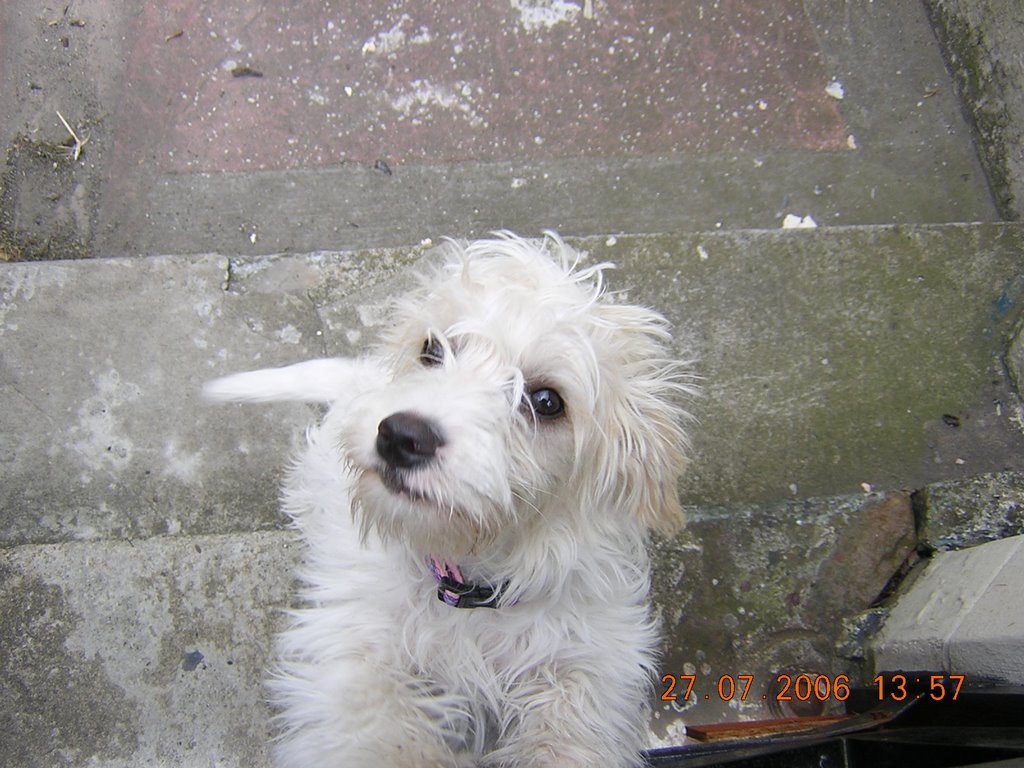


Youve gone to the shelter and found the perfect puppy, the puppy you and your family just have to have and now have the need to take care of your new puppy at home. Or, your female dog has had a beautiful litter of puppies but for some reason or another is not nursing them.

Do these scenarios sound familiar? If so, or if youve found yourself in a situation where you have a puppy that cannot be nursed the natural way, you are going to have to feed him or her by hand. The most effective means for accomplishing this is via bottle feeding.

When you first take on the task of bottle feeding a puppy it is extremely important to remember that the younger your puppy is, the more often you are going to have to feed him or her. During the puppies first two or three days of age you will need to bottle feed approximately once every two hours and for the rest of the first week a minimum of once every three hours.

After the first week your puppy is going to need to be fed at least five or six times per day. As puppies get older the frequency with which you will need to hold a bottle feeding session will decline.

Youre first order of importance when considering to bottle feed a puppy, or making the preparations to do so, that what you feed him or her is nutritionally balanced to fit the puppies needs. There are a number of puppy milk formulas on the market that will take the guesswork out of mixing your own formula, three of the most common are: Esbilac, Puppylac and Hartz Advanced Care Puppy Milk Replacement.

Now that youve determined what youre going to feed your puppy, you need to have a bottle to actually perform the task of feeding. Most veterinary clinics, pet stores and pet departments in larger department stores will have bottles specifically designed for nursing puppies. If you are unable to procure an actually puppy nursing bottle you can substitute a human infant bottle equipped with a preemie nipple.

The actual bottle feeding process is really quite simple. First mix the formula and be sure that it is mixed well and without clumps as otherwise will cause the formulas nutrients to not be dispersed well and also bottle nipple will plug. While the formula is cooling to room temperature make sure you puppy is lying on his or her belly.

Gently insert the nipple into the puppys mouth. If youre puppy doesnt take the nipple directly let a small drop fall on his or her mouth and with an extremely gentle prying motion open your puppies mouth and insert the nipple that way. Once the nipple is in place your puppy should take to the nipple and begin sucking naturally.

Be careful to not overfeed your puppy, play it safe and allow them to only drink a little less than they desire. Overfeeding can result in a number issues that can be detrimental to your puppies health that may require veterinary assistance to correct. It is always better to feed a lesser amount but increase the frequency of feeding sessions.

Just as with a human infant, puppies need to be burped too. At the end of a feeding session hold your puppy upright against your shoulder and gently pat his or her back. By doing so you will decrease the likelihood that your puppys belly will bloat and will lower the chances for your puppy to become colicky.


By: MattR


Article Directory: http://www.articledashboard.com


Matt operates the website A Happy Dog  hpp://www.ahappydog.com

Read more

Kamis, 19 Mei 2016

Obedience Heel for large and small breeds

0

                 
 Img 1                            Img 2                                                    

Img 3


Step 1: Use a wall as a barrier so your dog doesn’t swing out in front of you at first-you are on one side of the dog the barrier on the other.


Step 2: do a little warm up of the cue “Touch” (getting your dog to target your hand) in the way you usually do it to get the dog on the right track.  Now stand with you hand against your leg at the point where your dog can just reach it without having to jump (img 1). Cue “touch” and click ANY motion towards the hand.  Try to feed the dog in the position you desire them to be in(img 2). Stand with your legs together at first, but also stand in many different positions- with a foot pointing out, with a foot pointing behind, crouching, bouncing slightly, shuffling your feet etc, teaching the dog this is the position I want you to be in no matter what my legs are doing (img 3).


Step 3: Once your dog is a master at this, try taking a tiny step. Two inches forwards. If the dog scoots forwards click and treat!  If your dog can master tiny adjustments it will really fix it in their minds that “this is where I’m supposed to be, head up, glued to your leg”. 

Step 4: Repeat all the exercises in the sit position as well (img4).  If you have a small dog you can also start beginning to lift your hand up to the final position, the dog may start to jump to reach your fingers, ignore this, instead click the dog for having all 4 feet on the floor.  Sometimes if you click AS you remove your hand, that can speed up the process tremendously (img5)


Img 4                                       Img 5


Step 5: Take a normal step and click the dog for moving with you.  Now add steps (img6). If the dog looks down, or lags or is too far out, try to encourage them to return to the hand, and click when they are back in place. If they don’t seem into it try again later, and take less steps.  This is hard work, especially because they will be using new muscles than just normal walking and trusting you completely that you won’t walk them into a wall! Do this exercise on flat ground with nothing to trip and stumble over. Practice turning right and left in little increments to begin with.  This “trick” can take months even years to perfect, so take it easy, it’s a great exercise for just building focus and understanding.   


               Img6                                                  Img7


Read more

Minggu, 24 April 2016

Teaching the Dog to Heel

0

Basic Dog Training


- The Heel Command


It never ceases to amaze me how many people I see being pulled along by their dog while out "walking". What amazes me more is that most of these people blame their dog for this behavior. If they only realized that the problem is on the other end of the leash.

If your dog pulls on the leash, youre kidding yourself if you think youre the "master". Dogs are smart, and they will take advantage of a situation if you allow them to.

The worst part of this situation is that it only takes a short period of time to teach your dog to heel. Since walking with your dog is something that youll be doing every day, from the very beginning, it only makes sense that the "heel" command be among the first that your dog learns.

When your dog obeys the "heel" command, not only does it make it easy on your arms while out on walks, it also helps ensure that Fido is safe and behaved while out in public. It also lets him know that youre the boss, which is imperative in the human-canine relationship. And in those instances when a cat or other small animal runs out in front of you, it allows you to retain control when your dog wants to follow its instincts to chase the other animal.

For those unfamiliar with basic dog training, the function of the "heel" command is to have your canine companion walk alongside you, rather than in front of you. When a dog heels correctly, the leash remains slack, and Fido matches your pace, not vice-versa.

At this point, youre probably saying to yourself "That sounds great. But I bet its a hard thing to teach." Actually, its pretty straightforward, and like most dog training, it usually is taught by combining strong positive reinforcement and short but firm corrections.

Start out by putting your dog on a short leash, and have some small treats available. With the dog by your side, facing in the same direction, hold a treat in your hand. Issue the "heel" command using a firm, yet gentle voice. Proceed to walk forward. If the dog responds by walking along with you, praise him with an enthusiastic "Good Boy" (or Girl), and reward him by giving him the treat. If he doesnt heel, dont try to coax him with the treat. Consistency is important, and Fido needs to realize that hell get his treat when he displays the correct behavior. Remember to always reward him when the desired action is carried out. If youre lucky, a few repetitions of this series of actions will be all thats needed to teach your dog to heel.

With a little patience, this method will work well for many dogs, and will also help you to form a close bond with your pet. However, some dogs are a little difficult, and may be a little harder to train. This does not mean youve got a bad dog. It just means youll need to work a little harder to get the desired response. In this case, youll need to utilize some additional, corrective techniques.

As before, call the animal to your side and position him next to you, again facing the same direction. As you did earlier, voice the "heel" command, and walk forward. The dog will probably not walk with you. Instead, he will likely try to go off on his own. To correct this behavior, apply a firm but short correction on the leash. Never, never, pull your dog. Let the collar return to a slack condition.

Repeat the exercise, and if your dog obeys this time, praise him enthusiastically and reward him with a treat. Fido will quickly learn that to disobey the "heel" command results in a period of discomfort, but walking alongside at your pace gets him a tasty treat and a lot of vocal praise. It may take a few days, but if you are consistent in your training methodology, and reward him accordingly, Fido will soon be responding eagerly to your "heel" commands, and corrections will no longer be required.

About the Author:
Nick Bulka operates a number of pet related sites, including Dog Training and Pet Guide


This article is free for republishing
Source:
http://www.articlealley.com


Nick Bulka operates a number of pet-related web sites. Visit his sites at http://www.petsupplyguy.com, http://www.dogtraininginstruction.com, and http://www.pet-guide.us

Read more

 
Powered by Blogger