Tampilkan postingan dengan label to. Tampilkan semua postingan

Selasa, 21 Juni 2016

Just how much you need to love your Puppy

0

Of course this little monkey no


longer need bottles but think


back to the very beginning
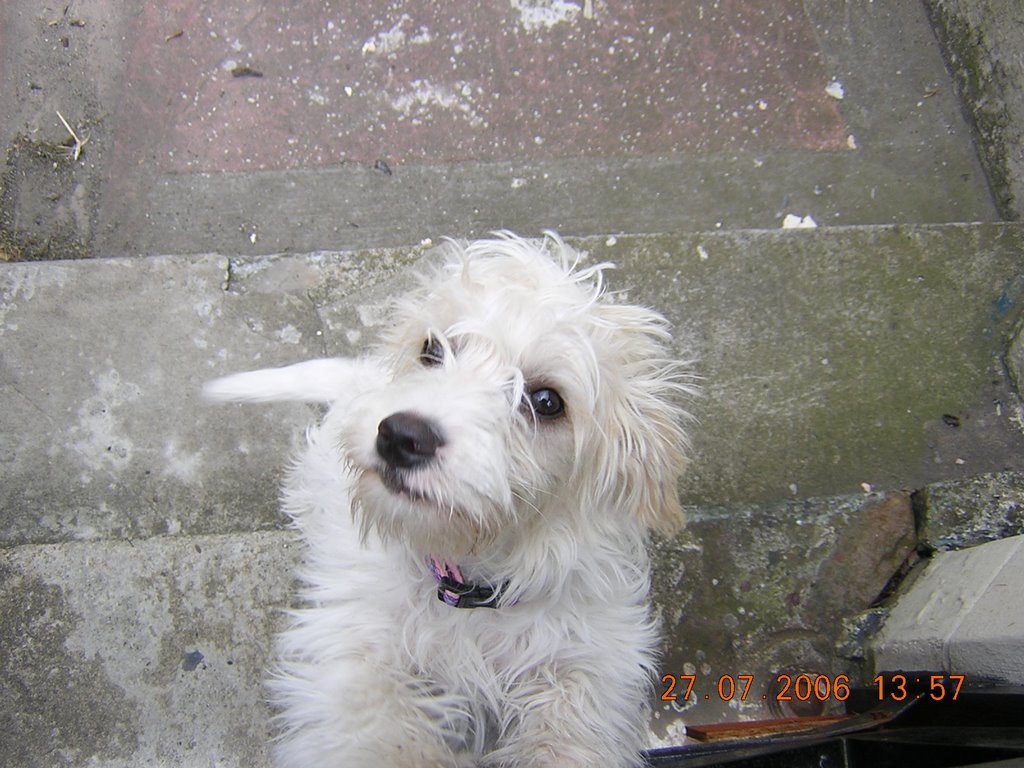


Youve gone to the shelter and found the perfect puppy, the puppy you and your family just have to have and now have the need to take care of your new puppy at home. Or, your female dog has had a beautiful litter of puppies but for some reason or another is not nursing them.

Do these scenarios sound familiar? If so, or if youve found yourself in a situation where you have a puppy that cannot be nursed the natural way, you are going to have to feed him or her by hand. The most effective means for accomplishing this is via bottle feeding.

When you first take on the task of bottle feeding a puppy it is extremely important to remember that the younger your puppy is, the more often you are going to have to feed him or her. During the puppies first two or three days of age you will need to bottle feed approximately once every two hours and for the rest of the first week a minimum of once every three hours.

After the first week your puppy is going to need to be fed at least five or six times per day. As puppies get older the frequency with which you will need to hold a bottle feeding session will decline.

Youre first order of importance when considering to bottle feed a puppy, or making the preparations to do so, that what you feed him or her is nutritionally balanced to fit the puppies needs. There are a number of puppy milk formulas on the market that will take the guesswork out of mixing your own formula, three of the most common are: Esbilac, Puppylac and Hartz Advanced Care Puppy Milk Replacement.

Now that youve determined what youre going to feed your puppy, you need to have a bottle to actually perform the task of feeding. Most veterinary clinics, pet stores and pet departments in larger department stores will have bottles specifically designed for nursing puppies. If you are unable to procure an actually puppy nursing bottle you can substitute a human infant bottle equipped with a preemie nipple.

The actual bottle feeding process is really quite simple. First mix the formula and be sure that it is mixed well and without clumps as otherwise will cause the formulas nutrients to not be dispersed well and also bottle nipple will plug. While the formula is cooling to room temperature make sure you puppy is lying on his or her belly.

Gently insert the nipple into the puppys mouth. If youre puppy doesnt take the nipple directly let a small drop fall on his or her mouth and with an extremely gentle prying motion open your puppies mouth and insert the nipple that way. Once the nipple is in place your puppy should take to the nipple and begin sucking naturally.

Be careful to not overfeed your puppy, play it safe and allow them to only drink a little less than they desire. Overfeeding can result in a number issues that can be detrimental to your puppies health that may require veterinary assistance to correct. It is always better to feed a lesser amount but increase the frequency of feeding sessions.

Just as with a human infant, puppies need to be burped too. At the end of a feeding session hold your puppy upright against your shoulder and gently pat his or her back. By doing so you will decrease the likelihood that your puppys belly will bloat and will lower the chances for your puppy to become colicky.


By: MattR


Article Directory: http://www.articledashboard.com


Matt operates the website A Happy Dog  hpp://www.ahappydog.com

Read more

How long does it take to train my dog

0

A FAQ I receive is: "How long will it take for my dog to be trained?" I hate to say it, but there is no simple answer...or magic wand. Every persons situation and dog is different. Whether it be a puppy that has been brought into a first time dog owners home, or a intra-familial dog-dog aggression case - all depend upon the humans that are taking care of the dog(s), and the dogs themselves. Some factors to consider are:
  • Type of training - general manners, aggression/fear, guarding/predatory issues. 
  • Human involvement - keeping up with the training plan, setting the dog up for success.
For "good manners" courses I currently offer 4-session "intensives" as opposed to the traditional 6 week+  classes. Why? I found that most people are more likely to commit to a shorter time frame if they are receiving the information they want. And that for those that are into keeping up with their dogs behavior modification, will return for additional class time (my ongoing classes provide this type of training plan). 

For the more difficult behaviorial issues, again it really depends upon the humans and dogs. But I would place more emphasis on the "humans" and their involvement. Think about how long it takes a human to change something about their own behavior? Something like smoking cessation takes quite some time to get over the "initial hump". Afterwards, the person will need to help maintain this behavior by setting themselves up for success - spend time around non-smokers, go to places that dont allow smoking etc... But its a lifelong process. With our dogs, there would be the "initial hump" - meaning more training. Once the dog is behaving in a way you want, you will still need to set the dog up for success, and help "maintain" the behavior by practicing elements of the initial training plan... Some of the dog-dog cases Ive worked took many many months - with multiple training sessions every day, for extended periods of time. 

So when I hear people asking me "how long will it take to train my dog?" I will ask "How much time, energy, and in some cases money, are you willing to put in?" and "How badly do you want it?" 

Read more

Senin, 20 Juni 2016

Everything you can imagine is real Pablo Picasso

0


"Our truest life is when we are in dreams awake."
-Henry David Thoreau

Read more

WHO do you really want to blame

0

I was in one of my favorite stores yesterday...waiting in line to buy groceries for din-din, and couldnt help overhearing the conversation between one of the cashiers and a customer. As soon as I heard the words "my dog" my ears perked up...Like any predator, my sense of hearing improved once I acknowledged my "prey" - so to speak... 

I guess the customer was buying lots of doggy treats, because the cashier commented about her own dog, and that she loved her dog etc... but that she (the dog) was "naughty" and in the "dog house".... Yes, this is what caught my attention, blaming the dog for something the human probably did in the first place to set the dog up for "failure"... 

From what I heard, and trust me, I didnt listen very long... once I heard the blame-game I shut my ears and diverted to the luscious chocolate display next to me...plus, I saw a friend there, who happens to be a former student of both my private and Manners class. Anyway, she arrived at the perfect time. We started chatting away, which was a great diversion for me. 

What was being said you ask? I guess the cashier and her boyfriend left a pile of food out on the counter at their home... including a pizza... Well, counter-surfing is a grande game to be played by any animal, especially dogs (and husbands when freshly baked cookies are sitting out)... Not only can dogs jump up on counters easily - or stretch and put their paws up...theyre also quite efficient at using their mouths and paws, pulling items onto the floor to be devoured. Especially when the said item is a freakin pizza!!! YUM! What a HUGE payoff!!! 

So, come on!! Really? Blame the dog? Really? Hmm... I myself applaud the dog for being so resourceful and clever, and for hopefully teaching those humans a lesson about "puppy proofing" their home... I say put the humans in the dog house for being naughty... Oh, and by the way, as much as I hate to admit it, being the professional that I am, its happened to me too! Yep, me, the one who teaches everyone else about dogs... My own dog Poncho taught my husband and myself about puppy proofing out home! Lets just say were much more careful about where we leave food, especially when were preoccupied with each other :-) These animals learned!

Read more

Sabtu, 18 Juni 2016

Dog Behavior and Discrimination how come my dog listens to my husband but not me

0

I know, nowadays the word "discrimination" can be a negative thing. As socially conscious humans were not supposed to discriminate - at least when were talking about certain human characteristics. But trust me, we discriminate all the time - and its a good thing, as youll see below. How does discrimination relate to dog training? First a general definition of discrimination: 
  • the recognition and understanding of the difference between one thing and another: discrimination between right and wrong | young children have difficulties in making fine discriminations.
  • the ability to distinguish between different stimuli : [as adj. ] discrimination learning.
With consistency, and precise timing, we can actively teach dogs to discriminate. Check out the video of me and Poncho the dog. Im teaching him to discriminate when to jump through my legs. Turning my right leg out is the cue for him to jump through. Turning my left leg out, he isnt supposed to. He got his reward for staying put. 


Poncho learned pretty quickly that: right leg turned out = jump through = gets rewarded. Left leg turned out = stay = gets rewarded. If he didnt jump when he was supposed to, or jumped when I didnt want him to, then Id give him a "too bad", which is the cue for "no reward". The punishment is he doesnt get a food reward, and he has to wait to try again. 

Another human world example:
  • Green light = "go", Red light = Stop, Yellow light = "slow down in preparation of stopping" (although some folks define the yellow as "speed up and get through the intersection"). 
In this example we, as humans, discriminate between the different colors of the traffic signal, and based on what weve learned, we know what to do for each one. I dont know about you, but when I was a child, I quickly learned which parent to go to for what, and when to ask. This is example of "discriminative learning".

As a certified pet dog trainer, I often hear comments or get questions, either from my manners class students or my Noozhawk advice column about "Why does a dog do one thing for one person and not another? Why does my dog pull on leash with me, but not my spouse?" Well, the simple explanation is: One person is more consistent with teaching and rewarding what they want and/or punishing out what they dont want. In a case like this, the dog in question has been able to discriminate which parent to go to for what! 

Dogs, just like small children, dont have the mental capacity to distinguish between right and wrong. They arent born with the section of the brain that is wired for it, and they never really develop it. However, they are very good at differentiating between safe and dangerous. Along with discriminating between safe or dangerous stimuli, they are masters at discriminating between finite cues - provided passively or actively. For example:
  • Passive cue: sneakers = going for walkies, dress shoes = dog stays home while human goes to work. 
  • Active cue: human places specific blanket (environmental cue) on couch = dog gets to hang out on couch. No blanky on couch, doggy isnt allowed on couch.
So, if your dog is behaving differently for you than they are for someone else, ask yourself: 
  • What am I rewarding or not rewarding my dog for?
  • Am I being consistent?
  • What cues am I giving my dog?
Then, once youve answered yourself, you can then fix the problem, if there is one. 

Read more

Jumat, 17 Juni 2016

Great Ways To Help Train Your Dog problems

0


If you have never owned a dog before, the process of dog training may seem to be an impossible task. There is so much information available on training dogs that its easy to become completely overloaded with no idea of where to begin. Below, you will find some suggestions on getting started with dog training.

Most dogs are eager to please and respond better to rewards than punishment. You must first show your dog what you expect them to do and then repeat the process until they get it. This is the most effective way to modify a dogs behavior or teach him a trick. You must show them through repetition and reward.


 Challenge your dog often. Provide your dog with fun ways to "quiz" it in order to ensure that it hasnt lost past training.

 Never punish your dog while trying to train him. Taking preventative measures to avoid the occurrence of a bad behavior to begin with is always best, however, if your dog does get out of line, demonstrate how it should have been done rather than scolding him. Training your dog is a great way to develop a positive relationship with him.

 Learn alternatives to treats as positive reinforcement when training your dog. Treats do work for teaching a new behavior. However, you may not always have a treat with you to congratulate you dog outside of regular training sessions. Verbal praise and physical affection, such as hugs and petting, can be just as effective as treats to reinforce any desired behavior when training your dog.

 Include plenty of physical activity in your dogs training routine. Dogs can get bored easily. A bored dog will try and find something interesting to do, and training is not usually interesting. It is easier for your dog to focus if he is happy and well exercised. A long walk or a brisk run are great ways to get rid of some of your dogs excess energy.

 Anxiety is frequently the cause of destructive chewing behavior. Give your dogs something they are allowed to chew on like a toy or treat, and put them in their kennel while you are away.

 During the dog training process, it is a good idea to use various treats as rewards for your dogs good behavior. Do not use the treats that you would give your dog day to day. They should be specific to training and ensuring the feeling of being rewarded for something specific. The dog will also be more likely to obey if they know they will receive something special.

 Your dog should be happy with everyone in your home so he does not suffer from separation anxiety. The dogs relationships to other people serve to dilute its unhealthy level of dependence and fixation on you that causes it so much grief.

 When possible, puppy training is the most effective form of dog training. This is not a hard and fast rule, but young dogs do respond better to training. When you train your dog as a puppy, he will be a well-behaved dog throughout his life.

 It is important to take your dog on a rather long walk if you plan on being gone for several hours. If your dog is exhausted, he wont experience as much anxiety when you leave.

 Any introductions to new animals should be made very slowly. Give your own pet great consideration before bringing another animal into the house. You can boost bonding efforts by getting a new pet that has a complimentary personality to your own.

 Try not to take your stress out on your dog by yelling at it because of your bad day or bad mood. Unless your dog has done something that warrants scolding, you should always take on a positive tone during your interactions.

 A first step to training a puppy is get him used to hearing his name. Call him using his name and teach him how to respond when called. Your puppys name should be one of its first words learned. Its important that the time spent with your puppy is quality time. Spend your time playing with your puppy. This way he will get to know you quicker and will begin to trust you faster. The puppy will be more open to more training down the line.

 Mentally stimulating your dog is important to its health and happiness. Frequent outside walks, chew toys and even healthy snacks offer great options for entertaining your dog. Any dog who is bored will find a number of ways to amuse himself and spend his time, such as chomping your favorite pair of shoes or digging up your prized botanical collection!

 You can rest assured that when you train your puppy, they may have an accident in the house. Immediately clean up every accident for training purposes. Carpets are known to trap the smell of urine and encourage the dog to return to that spot for further marking. Buy a product specially designed to neutralize odors.

 If you want to get rid of inappropriate chewing behaviors, you need to set up the dogs environment so that he will have fewer temptations. Additionally, make sure there is nothing that can pose as a threat to your chewing canine. Any objects which your dog could choke on or become entangled in should be kept out of reach.

 Remember that more difficult behaviors should be approached in steps. A simple example is teaching your dog to get the morning paper. You first need to teach him exactly what a newspaper is and then how to hold it. He will then need to know what the object is by name. Then, he needs to be taught to pick up the object. The last step is to train him to bring the object to you. If you break it down, your dog will understand the linear relationship of the behavior.

 Although a harness is more comfortable for dogs, it does not offer as much control as a cinch-type collar. Keep your dog on his harness, but also use your cinching collar. Tug on his collar when its absolutely necessary, and your dog will soon learn how to obey wearing the harness alone.

 You can prevent your dog from destroying your home by keeping it outdoors when you are away from the house. When this isnt possible, you want to provide things that both appeal to your dog and that are okay for the dog to chew on. Establishing acceptable chews toys is also about keeping those things you do not want your dog to chew up behind closed doors or well out out of reach.

 By following these tips, you should have a better understanding of how to train your dog. Putting these tips into action while training your pup can help the two of you forge a wonderful ongoing relationship..

Read more

A Useful Approach to Listening to Your Dog is Simple Observation

0


Joan Mayer

A recent Dear Inquisitive Canine reader asked about her beagle Bill and his enjoyment of playing with larger dogs. I explained the similarities of how humans of different shapes and sizes can learn to play with one another without getting hurt. The best way to tell if your own dog is enjoying him or herself is to pay attention to his or her body language. She or he will “tell” you if he or she is enjoying play or not very clearly, you just need to be watchful of the signals s/he is sending. To view the complete article, check out our Dear Inquisitive Canine column.

Regarding this readers comments of how she described Bill’s behavior, I wanted to add this about what to watch for:

From what you’ve described it appears you have a very keen eye for details of Bill’s body language and that you’re “listening” to what he is saying. I say bravo! Bill is excited to play with the larger dogs and appears bored with the smaller dogs. Although I haven’t witnessed their romping social functions myself, I’d like to first address your comments “hardly pays attention to us, and becomes the center of attention as he runs around with a pack of big dogs playfully chasing him all over.”

  • Make sure you are still the center of Bill’s universe. He can certainly run off and play with his friends, but work on a nice (and more reliable) “coming when called” so he learns to check in with you more often. It’ll be rewarding for him, while enhancing the bond you share. Plus, if you need him to come back to you, for whatever reason, he’s more likely to want to. For additional information on teaching your dog to come when called, check out these dog training tips on Recall (aka: coming when called).
  • Make sure Bill isn’t being targeted or ganged up on. Even if Bill keeps going back for more, sometimes "horseplay leads to tragedy" (as our mothers taught us). One dog can end up being the recipient of all that exuberant doggy energy. You’ll want to make sure the dogs are interrupting themselves, or you interrupt before the built-up energy takes the group past the point of no return. Note: you’ll want to check with the daycare staff that play is being monitored carefully for appropriate play.
For the remainder of this Dear Inquisitive Canine article, as well as additional dog behavior advice columns written by Poncho the dog and yours truly, check out the local Noozhawk website.

I have to say, this dog guardian was superb on watching out for the safety of her dog Bill and “listening” to what he was saying. I would nominate her to be the dog park playground monitor if she were ever interested :-)

Read more

Rabu, 15 Juni 2016

How To Get The Most Out Of Your Dog While Training

0


Dog training can be one of the most important investments that you make in your dog. If you can instill obedience and loyalty in your dog as a puppy, you will have a family friend for life. You can learn more about how important training your dog is.

Everyone should treat your dog in the same way so as not to confuse him. Consistency is the best way to get your dog trained quickly. If people who are involved with the dog each have different methods of treating the dog, it will become confused.


 Have your dog learn to just hold one of his toys in his mouth, instead of chewing on it immediately. Every time he does it, give him a snack and use the clicker. After your dog succeeds in mouthing an object a few times, move on to rewarding the dog for picking it up with his mouth. When he does respond, click and provide a reward. Also, rewards should only be given if the toy remains in the dogs mouth.

 Always keep the atmosphere positive and motivational when conducting a training session with your dog. If your dog performs a task you ask him to, reward him. Negative reinforcement will only confuse your dog early in its training and is likely to make your dog afraid of you.

 You always want to make certain your dog has good leash manners. This helps keep both you and your dog safe when going on walks.

 A crate can come in handy when housebreaking a dog. To make crate training work, make sure you take your dog out often and on a stable schedule. If youre patient you will find a dog who has been crate trained will make less messes inside.

 If you want to be successful in house training an animal, make sure that you stick to a strict schedule for feeding times and elimination times. This gives both you and the dog a heads up as to when they need to go outside, and you can make sure that happens before they make a mess indoors. Having a regular schedule will help your dog know that a potty break will be coming, and he will hold learn to hold his bathroom urges until that time.

 Depending on the personalities of your dogs, it may not be possible to train them at the same time. Dogs have the tendency to distract each other. If you find this happening it is likely best to separate them.

 To teach or reinforce good behavior, you might try to introduce them to clicker training. In order to begin, simply create a happy mental link between the clickers sound and something the dog enjoys. Try clicking and treating immediately, and doing this several times over a few days. Soon, your dog will associate the click with reward or other positive actions, which can be very helpful in shaping the desirable behaviors you hope to achieve.

 Learning how to show authority is the foundation of all dog training. He needs to know that you are the authority before he will let you train him. Never allow your dog pull on the leash while you are on a walk.

 Take small steps when crate training your dog. Once your dog seems to have acclimated to the crate itself, close the gate and feeding him through it. Begin with small intervals, and work your way up to longer times. If the dog becomes upset, then you need to take a step back and slow down the training.

 Tell your house guests how to interact with your pooch. These things can lead to your dog trying to establish dominance, or he may jump on a guest.

 It is important to use a wide spectrum of treats when training your dog. Dont use your dogs everyday treats for training. You want to place special emphasis on their improvement in training.

 When your dog reaches six months, make sure that your dog is spayed or neutered. This should coincide with the beginning of obedience classes. A dog that has been spayed or neutered will be a more obedient dog. You and your pet will enjoy a longer and happier life together.

 Try to ensure that your animal feels safe. If dogs feel unsafe, they will likely lash out in some type of bad behavior. To prevent any aggressive behaviors, ensure you dog is in surroundings and situations where he feels safe.

 Crate training is very beneficial, but there can be difficulties that the following tips can help with. If your pet is nervous about the crate, consider putting a toy or treat inside to motivate them to go in. Temptation wins with this exercise; your dog will be eager to enter the crate when a treat is waiting for him. Give your dog some praise when he gets inside, so that he further associates being in the crate with good behavior.

 If your puppy is caught chewing on something unacceptable, stop him immediately. This helps teach them that they cannot chew on some things and can help them leave your belongs alone when youre not watching.

 If your puppy is caught chewing on something unacceptable, stop him immediately. This will help your puppy understand what is acceptable and what is off limits.

 When training a dog it should always be done in a positive, motivated environment. Remember to reward desired behavior achieved by your dog while training, especially in response to specific requests. Using training techniques that are negative and based upon punishments will likely make your dog afraid, disobedient, and unhappy.

 A clicker works well when training most dogs. Using a clicker is as simple as showing your dog that good things happen when the clicking noise is heard. Try using this technique right away, doing it frequently over a span of a few days. Your dog will soon know that the clicking noise means that they are doing a good job.

 As this article has demonstrated, dog training is a very wise use of your time and energy. A badly behaved dog can destroy your house and stress everyone in the family; soon no one will want him around. By applying the information found in this article, youll be making a wise choice and helping your dog to be an enjoyable member of your family..

Read more

How to teach your dog to scratch your back

0

Newbear95 from youtube has some really inventive tricks that she does with her chihuahua. Here is a tutorial on how to teach your dog to scratch your back.


I gave the trick a try with Kiko, she simply loves scratching my back now!

Read more

Back to school!

0

How exciting! I was just hired to take over the dog training classes here in Ventura through the Ventura College Community Education program! I start this Thursday! The class is similar to my course I teach at my own studio - all positive reinforcement - focusing on the behaviors we want from our dogs (not what we dont want...) I cant wait to get started!

Read more

Selasa, 14 Juni 2016

To Blog or Not to Blog

0

Id like a little feedback, from the people who have started to read my blog.  What would you like to read here?  Ive been at this for a few months now, and have a small number of readers (thank you), but Id like to have more.  What would keep you coming back, hungering for more?  Is it articles and how-tos on dog behavior and training?  Or is that too much work, too much like studying?

Maybe youd be excited to read more about what I do as a dog trainer - how I spend my days, what my cases are like, the strange things that happen when you train dogs for a living (yes, there are some weird things...), and what I do to make a living with this career.  Or possibly its more postings about my family of dogs (and kid)?

Maybe you want a mixture of these topics, or maybe something all together different.  Well, heres your chance.  Post a comment, send me an email or send up a message with a sky-writing airplane pilot.  Let me know, because the whole point of writing something is to have people enjoy reading it.

Thank you!

Read more

Helpful ideas to get you going

0


Part of the responsibility of pet ownership includes making sure your dog is well-trained. Dogs who are well trained tend to be happier. They know what to expect and when to expect it. This also provides a safer environment for you, the dog, and your neighbors. You can work with your dog on your own, or get the help of a trainer. Here are some helpful ideas to get you going.

If you want success in training your dog, you must make sure that your dog has a good activity level throughout his life. Dogs are not sedentary animals by nature. They have a great need for movement and exercise in their daily routine. At an agility class you can teach your dog to catch a Frisbee while your dog gets the exercise he or she needs. You could also let your dog tag along on your brisk walk or run. Try not to let boredom set in with your dog by keeping him active as much as possible.


 If you want to be sure you are successful in your dog training efforts, it is vital that you keep your dog active throughout its life. Dogs were not meant to lay around all day. To keep them happy and healthy, they have to run around or do a job. Try enrolling in an agility course, going for a run, or practicing Frisbee skills with your dog. It is best to make sure your dog is moving just as much as possible and does not get bored.

 Ensure that your dog gets enough activity. Dogs get bored just as easily as children. When dogs are bored they are difficult to train. Your dog needs proper exercise to function to his highest potential. Regularly take a walk or run with your dog.

 If hiring an animal behavior professional is something you are considering, make sure to learn as much about them as you can. Also it is important to find out is their chosen methods for animal training. You may not be comfortable with some techniques and you can request that they not be used with your dog.

 A harness is less bothersome to your dog, but also prevents you from exercising control when you need to do so. Keep your dog on his harness, but also use your cinching collar. Tug on his collar when its absolutely necessary, and your dog will soon learn how to obey wearing the harness alone.

 Your dog should not get a cold voice from you because of a personal conflict with another human or the fact you got stuck in traffic. Remember: if your dog has not done something wrong immediately beforehand, your interactions should always be positive.

 Prepare your dog early on for veterinary examinations. Press your hands firmly over his body in the same manner that the vet will and offer him encouraging praise. Practice handling both paw and teeth exams, by examining between the paw pads and lifting the dogs jowls. You might want to ask your buddies to assist you in the process.

 Though you want to train your dog well, sometimes obedience classes are necessary. Obedience classes provide you with plenty of tips to deal with a variety of problems you may face with your dog.

 When you begin training your dog, you should be aware of what his favorite foods are. Since these will be the rewards for good behavior when you are training the dog, it should be something that really motivates him. Take note of how your dog responds when he is given his reward.

 You may have to consult a professional when training your dog. When your dog training is going poorly, a professional can help out. A dog trainer can be invaluable in pointing out where the issues are occurring, and they can also put you back onto the right track.

 Treats are great rewards, but you need to find other positive reinforcements for training. Remember, that dog treats are one way to reward a dog for desired behavior. However, you may not always have a treat with you to congratulate you dog outside of regular training sessions. Giving your dog physical attention and praise will reinforce his positive behavior, as well as save you money and him calories.

 When you are adding a pet to your family, make sure that it is introduced slowly to existing pets. Dont adopt a new pet without considering the temperament of your current pet or pets. To make introductions go as smooth as possible, when you are choosing the new addition, try to find a personality that will complement that of your current pet.

 The simplest way to prevent a dog-in-training from destroying all your stuff is to put him outside when you arent present. If it is too cold out, or you cant leave the puppy outdoors for some other reason, you will just have to do your best to make his favorite objects out of reach. Leave him in one room with the door closed, and leave him some toys that are okay to chew on.

 Its important to use treats that really capture your dogs full attention when training. This is one time you can use something you would not usually give them, like meat.

 In order to be successful at dog training, you need to understand what motivates your dog. You are learning all aspects about your dog, his likes and dislikes, and what is effective and ineffective. He will expect love and positive reinforcement from you. He enjoys training and will respond to your leadership and patience. Happy dogs tend to perform better, and are easier to train successfully.

 A new dog requires teaching proper obedience training right from the beginning. It is much easier to get a dog to learn the right way rather than making it unlearn its bad habits. If you never give your dog any scraps from table food, they will never start begging for it.

 Ensure that your dog gets plenty of exercise and stimulation. Dogs require mental stimulation to stay happy and healthy. Dogs with no enthusiasm will be harder to train than active dogs. If you have a happy, exercised dog, they will listen better. A long walk or a brisk run are great ways to get rid of some of your dogs excess energy.

 If you are welcoming a guest into your home, give them clear instructions about how to interact with your dog. Keeping calm, and introducing themselves to your dog, may help reduce any negative behaviors that another approach would cause.

 Whenever you want your dogs attention, use its name. You will not be able to control your dog if you do not get his attention first. Practice calling your dogs name and letting him respond at least tens times a day. Also, it is very inappropriate for you to call the dog over to you and then punish him, as this will teach him to fear you and discourage him from coming when called.

 Always use your dogs name when you need his attention. To have some good control over your dog, a solid response is crucial. Call them to you at least ten times a day. Try to avoid punishing your dog when it comes to you after you call out its name while using this technique.

 This article should have given you some valuable information for training your dog. Keeping these tips in mind when you start training your dog can help you become a very happy dog owner.

Read more

Senin, 13 Juni 2016

GENERAL HISTORY OF DOGS

0

GENERAL HISTORY OF DOGS.

There is no incongruity in the idea that in the very earliest period of mans habitation of this world he made a friend and companion of some sort of aboriginal representative of our modern dog, and that in return for its aid in protecting him from wilder animals, and in guarding his sheep and goats, he gave it a share of his food, a corner in his dwelling, and grew to trust it and care for it. Probably the animal was originally little else than an unusually gentle jackal, or an ailing wolf driven by its companions from the wild marauding pack to seek shelter in alien surroundings. One can well conceive the possibility of the partnership beginning in the circumstance of some helpless whelps being brought home by the early hunters to be tended and reared by the women and children. Dogs introduced into the home as playthings for the children would grow to regard themselves, and be regarded, as members of the family

In nearly all parts of the world traces of an indigenous dog family are found, the only exceptions being the West Indian Islands, Madagascar, the eastern islands of the Malayan Archipelago, New Zealand, and the Polynesian Islands, where there is no sign that any dog, wolf, or fox has existed as a true aboriginal animal. In the ancient Oriental lands, and generally among the early Mongolians, the dog remained savage and neglected for centuries, prowling in packs, gaunt and wolf-like, as it prowls today through the streets and under the walls of every Eastern city. No attempt was made to allure it into human companionship or to improve it into docility. It is not until we come to examine the records of the higher civilisations of Assyria and Egypt that we discover any distinct varieties of canine form.

The dog was not greatly appreciated in Palestine, and in both the Old and New Testaments it is commonly spoken of with scorn and contempt as an "unclean beast." Even the familiar reference to the Sheepdog in the Book of Job "But now they that are younger than I have me in derision, whose fathers I would have disdained to set with the dogs of my flock" is not without a suggestion of contempt, and it is significant that the only biblical allusion to the dog as a recognised companion of man occurs in the apocryphal Book of Tobit (v. 16), "So they went forth both, and the young mans dog with them."

The great multitude of different breeds of the dog and the vast differences in their size, points, and general appearance are facts which make it difficult to believe that they could have had a common ancestry. One thinks of the difference between the Mastiff and the Japanese Spaniel, the Deerhound and the fashionable Pomeranian, the St. Bernard and the Miniature Black and Tan Terrier, and is perplexed in contemplating the possibility of their having descended from a common progenitor. Yet the disparity is no greater than that between the Shire horse and the Shetland pony, the Shorthorn and the Kerry cattle, or the Patagonian and the Pygmy; and all dog breeders know how easy it is to produce a variety in type and size by studied selection.

In order properly to understand this question it is necessary first to consider the identity of structure in the wolf and the dog. This identity of structure may best be studied in a comparison of the osseous system, or skeletons, of the two animals, which so closely resemble each other that their transposition would not easily be detected.

The spine of the dog consists of seven vertebrae in the neck, thirteen in the back, seven in the loins, three sacral vertebrae, and twenty to twenty-two in the tail. In both the dog and the wolf there are thirteen pairs of ribs, nine true and four false. Each has forty-two teeth. They both have five front and four hind toes, while outwardly the common wolf has so much the appearance of a large, bare-boned dog, that a popular description of the one would serve for the other.

Nor are their habits different. The wolfs natural voice is a loud howl, but when confined with dogs he will learn to bark. Although he is carnivorous, he will also eat vegetables, and when sickly he will nibble grass. In the chase, a pack of wolves will divide into parties, one following the trail of the quarry, the other endeavouring to intercept its retreat, exercising a considerable amount of strategy, a trait which is exhibited by many of our sporting dogs and terriers when hunting in teams.

A further important point of resemblance between the Canis lupus and the Canis familiaris lies in the fact that the period of gestation in both species is sixty-three days. There are from three to nine cubs in a wolfs litter, and these are blind for twenty-one days. They are suckled for two months, but at the end of that time they are able to eat half-digested flesh disgorged for them by their dam or even their sire.

The native dogs of all regions approximate closely in size, coloration, form, and habit to the native wolf of those regions. Of this most important circumstance there are far too many instances to allow of its being looked upon as a mere coincidence. Sir John Richardson, writing in 1829, observed that "the resemblance between the North American wolves and the domestic dog of the Indians is so great that the size and strength of the wolf seems to be the only difference.

It has been suggested that the one incontrovertible argument against the lupine relationship of the dog is the fact that all domestic dogs bark, while all wild Canidae express their feelings only by howls. But the difficulty here is not so great as it seems, since we know that jackals, wild dogs, and wolf pups reared by bitches readily acquire the habit. On the other hand, domestic dogs allowed to run wild forget how to bark, while there are some which have not yet learned so to express themselves.

The presence or absence of the habit of barking cannot, then, be regarded as an argument in deciding the question concerning the origin of the dog. This stumbling block consequently disappears, leaving us in the position of agreeing with Darwin, whose final hypothesis was that "it is highly probable that the domestic dogs of the world have descended from two good species of wolf (C. lupus and C. latrans), and from two or three other doubtful species of wolves namely, the European, Indian, and North African forms; from at least one or two South American canine species; from several races or species of jackal; and perhaps from one or more extinct species"; and that the blood of these, in some cases mingled together, flows in the veins of our domestic breeds.

Read more

Minggu, 12 Juni 2016

How to enhance any relationship

0

Besides chocolate? Thats easy - through clear communication and realistic expectations! Then what are some great ways to build a solid relationship? Being a great communicator. Which means, communicating in a language the other person or animal understands - remember, with dogs their first language is body language - so be aware of what your body language is saying, not what is coming out of your mouth.... Secondly, be a good “listener” - watch your dogs overall behavior, especially their body language - are they taking food? Tail tucked? Growling? Barking while backing away? Jumping up while wiggling their rear end? Look at the entire picture, interpreting what they are "saying" from their point of view, not yours.

As for the expectations, let me first say: “Know Your Animal!” It is one thing to have expectations, but have realistic ones... Thinking otherwise can only lead to increased frustrations. Is it fair for us humans to expect dogs to behave like us? No. Just like it isnt fair to expect another human to think like oneself. 

Read more

Sabtu, 11 Juni 2016

To find advice on training your dog

0


It is very common in households around the world to incorporate dogs and other domestic animals into the family home. Young animals like puppies are known for being mischievous and sometimes destructive. Review this article to find advice on training your dog.

It is vitally important that your dog is treated in the same manner, given the same commands and rewarded similarly by every member of your family. This is the only way to ensure the training sticks. Consistent methods is your best bet to get your dog to remember something. Make sure that everyone who trains your dog does it in the same manner as you in order to avoid confusion.


 Everyone in the family should follow the same rules when addressing your dog. For example, if your dog were to jump on the table and you say "off!" but another family member says "get down!", these conflicting commands will just confuse the dog. Having everyone on the same page when it comes to command usage will make training much easier, more successful and be far more pleasant for your dog.

 A large breed dog needs a large dog bed to be comfortable. You can buy a large bed for your large-breed dog, or even get a crib mattress to use as your dogs bed. These are advantageous for the fact that you are able to regularly change the cover by using crib sheets. Another good thing is that crib mattresses have a moisture-proof cover.

 If hiring an animal behavior professional is something you are considering, make sure to learn as much about them as you can. Also it is important to find out is their chosen methods for animal training. You may not be comfortable with some techniques and you can request that they not be used with your dog.

 Dogs should never be tied up close to each other. This is due to the fact that they could become tangled in each others cords and end up injuring themselves when trying to get free. It can even be fatal if you tie a large dog up with a small dog, and the large dog ends up getting a chain wrapped around the small dogs neck.

 Its important that your dog enjoy training and look forward to training sessions. Keep in mind that your dog does not have an attention span that goes beyond fifteen minutes. Be generous when it is time to reward! Give your dog plenty of praise and affection for his hard work and efforts. You and your dog should both enjoy training.

 Teaching your dog to not tug and pull when on his leash is an important part of his training. Think of the leash as a safety requirement.

 Positively encourage your dog without using treats. Using food is an effective and popular way to train dogs. You probably do not carry treats with you 365 days a year when you are not in an "official" training session. Start using praise and extra attention, hugging and patting, when your dog displays a positive behavior.

 When you begin training your dog, you should be aware of what his favorite foods are. Since these will be the rewards for good behavior when you are training the dog, it should be something that really motivates him. Take note of how your dog responds when he is given his reward.

 Its important to try out different treats and foods with your dog to find what his favorite is. Rewarding him with his favorite treat will be much more satisfying and motivate him to better performance in training. Make sure you pay attention to how he responds when you offer him this reward.

 Most dogs have anxiety as a reason for chewing. Putting your dog in his crate with a chew toy will reduce the chance of destructive events and give him something to do while he waits for you.

 Scold your puppy for chewing your belongings right away. Eventually, the puppy will come to understand which items he is allowed to chew. In addition, he will learn not to chew unacceptable items even if hes left unattended.

 Try training your dog to grab a toy and keep it in his mouth. When you see him mouth a toy, give him a reward or treat and use a clicker. After a few tries you should allow the dog to pick up the toy on his own. When he does, just click and then give a reward. After this, you should only reward your dog after he holds the toy in his mouth.

 Whenever you are teaching a dog a multi-step task, reduce it to a series of smaller tasks. This includes tricks like training your dog to retrieve your newspaper. He will first need to learn how to hold onto something. Then he should be taught to recognize that item by name. The next thing he should be taught is how to pick objects up. Finally, your dog should learn to bring an object to you on command. Breaking it down in this manner allows your dog to understand better.

 It is critical that you teach your dog the difference between correct and incorrect behaviors. Everyone who lives with your dog will have to undertake the same behavior for him to learn from your training. This can undo any progress you have made.

 Dogs need routine, so feed your dog at the same time every day. This also helps with training. This will help you better understand when your dog needs to go outside, so he doesnt go on the carpet and ruin it. When a dog has a schedule, they also learn the valuable skill of "holding it" until you take him for his next scheduled trip outside.

 It is important to take your dog on a rather long walk if you plan on being gone for several hours. If you play with your dogs and exhaust them, it helps the dogs handle the anxiety they may feel from being separated from you when you leave.

 Above all else, consistency is the key to effective dog training. Write down the specific commands you want to use with your dog, and get everyone in your household to review the list and use the same words. Also, make sure everyone knows what behavior should be rewarded, and what is considered bad behavior. If different people are responding differently with the dog, it will make training difficult and confuse the dog.

 If you have to keep your dogs outside, never tie them up too close to one another. If there chains become entangled with one another it could lead to an injury. This is especially dangerous if one dog is larger than the other, as it could use its superior size to maneuver the other dog into a dangerous position.

 When you get your puppy, be sure to create a bond to him by helping him learn his name. Repeat his name regularly, so he will learn to come to you when he hears it. These should be the primary words your dog needs to learn. Spending a lot of time interacting and playing with your puppy is the best way to establish a bond of love and trust. This will make him easier to train later.

 You should be able to have a clean home and a loving dog. It is easier to love and care for an obedient, well-behaved dog, so investing some time and effort in your training process is a great idea. These hot tips will make the story of you and your dog one that ends happily ever after.

Read more

Dog Trainers Need to Practice Too

0

Even though Im a professional certified pet dog trainer, doesnt mean I:
  1. Have the perfect dog (sorry Poncho, but hey Im not perfect either)
  2. Know everything there is to know about dog training
  3. Never have to practice...UGH!
You may have known from previous posts of mine, or from Ponchos posts, that weve been going to agility classes taught by our friend Margie Hanlon of the Seaside Scramblers... Margie is a real saint, I have to say, especially after reviewing my last bit of video. Wow, do I need practice. Just to prove that Im not perfect, I am posting a little bit of our latest session. 
Fortunately I did get better after warming up, and of course my hubby did a great job of running Poncho. But I thought this time around Id share a few laughs by showing the not-so-great footage. Good to remind myself that training of any sort is a mechanical skill. (Thank you Bob Bailey). 

Just like I tell my own dog training students, in both my Ventura College Community Education Canine College class, my manners classes at The Inquisitive Canine studio, and private clients, "If you practice, even 3 minutes a couple times a day, you get better, your dog gets better, and you get the behaviors you want!!! Its that simple...Hopefully, next week will be better - for me anyway, Poncho already knows what hes doing!  

Read more

To Training Your Dog With Effective Tips And Strategies

0


Every dog requires training to some extent in order to learn what to do and of course, what not to do. These tips should help you train your dog.

Teach your puppy his or her name before you start to train him or her, as this creates a bond. Use his name frequently, and make clear that you want him to respond by coming to you when you call his name. There is no other word your puppy should be taught first. Make sure to spend time with your dog in order for him to learn and trust you. When you set this trust early on, the puppy will be more open to the next steps in training.


 Training is a great way to help your dog with separation anxiety. It is quite possible that if your dog frequently barks unceasingly or damages your belongings when you leave, he or she is actually suffering from separation anxiety. You need to take the time to train your dog to not engage in these undesirable behaviors while youre not home. A great way to ease your dogs anxiety is through love and compassion.

 Use the dogs name often when training to ensure that you have their attention. By using his name all the time in the first month of having our dog, he should associate his name with focusing on you. Choose a short name that is easily recognizable from other words.

 A wise tip in canine training is to always call the dog by his rightful name, rather than using any nickname or other deviation. To maintain control of your dog, you must be able to encourage a favorable response. Try this with your dog at least ten to twenty times. Avoid confusion by not calling your dog to you for punishment.

 Use the appropriate tone of voice when you are correcting your pet. Dogs tend to be well in tune with how their trainers are feeling. An appropriately stern tone can reinforce discipline.

 When training your dog never punish him; doing so will only make him be resistant to any further training. You should make every effort to prevent the behavior in the first place, but if your pet does misbehave, show him what he should have done instead. You should make training a time to interact with your dog, you want to build a positive relationship with him.

 You need to let your dog be a dog, so give him some time to burn off that energy. Your dog requires a healthy diet, room to exercise, and plenty of activities and toys to keep him or her busy.

 Communication is the basis for dog training. As you train and interact with your dog, you must be consistent and straightforward. This applies to corrections and rewards, as well as your body language, when training. Remember to always pay attention to the communication signals from your dog. The animal will usually let you know what he or she is feeling.

 In order to get your dog to obey you, it may be wise to take obedience classes. The obedience instructors can teach you a variety of ways to deal with issues such as your dog not listening, excessive barking, or disobedience toward commands.

 Ensure that your dog understands the rules. This means everyone living in the house needs to enforce the boundaries you set. This will quickly undo all of your hard work and training.

 Dont bog your puppy down with more information than he can process. You need to keep your training sessions short so that your puppy pays attention. If training sessions are too long, the puppy wont remember the specifics of the training session, just that is was grueling and exhausting. This will make it harder to train him next time.

 When house-breaking your puppy, choose a specific phrase to use when its time to go outdoors. When you take your dog out, repeat this command. This will help him form an association between being taken outside and doing his business.

 It is vital to train your dog when its still a puppy. Younger dogs learn more quickly and easier than older canines. Beginning your dogs training when he is still young will help him to be a well-behaved dog as he ages.

 Training your dog can be much easier if you use a crate. Use a consistent schedule for proper crate training of your dog. Over time, a dog that is properly crated trained is less prone to having accidents inside the home.

 Be sure to have your dog spayed or neutered at six months. You should do this at the same time you first take the dog to obedience training. A dog that has been spayed or neutered will be a more obedient dog. By spaying or neutering a dog he will have a longer happier life.

 A dog needs to be trained from the outset. The sooner you start training the dog the better, because they have not learned bad habits that you will have to correct. If you never give your dog any scraps from table food, they will never start begging for it.

 When you begin training your puppy, create a bond with him by first teaching him his name. Simply start by calling his name as often as possible. Once he learns his name, you can encourage him to come to you when called. Your dog should learn these items before any others as theyre the most important. Spend plenty of quality time with them, so that they know that they can trust you. In this way, he will be more receptive to advanced training later.

 Communication is one of the essential aspects of training your dog. Make sure you are clear and consistent when you are working with your dog. This means to be consistent not only with words, but with corrections and rewards. Be well aware that your dog is telling you something too. They will inform you of whether or not they are overworked, anxious, or having a great day.

 You can prevent your dog from destroying your home by keeping it outdoors when you are away from the house. When this isnt possible, you want to provide things that both appeal to your dog and that are okay for the dog to chew on. Establishing acceptable chews toys is also about keeping those things you do not want your dog to chew up behind closed doors or well out out of reach.

 Dogs that have received no training are likely to destroy your possessions and try your patience. If you use the advice in this article, you will be ready to teach your dog that skills will help the owner-pet relationship..

Read more

Jumat, 10 Juni 2016

Bringing clarity to clickers and positive reinforcement

0

You hear the words "Clicker training", "Clickers", "Positive Reinforcement" etc... but whats it all mean? Let me try to help clarify some points:
  1. Using a "Clicker" doesnt mean a person doesnt use "punishment" (hopefully not at the same time)... 
  2. Positive Reinforcement doesnt mean a person doesnt use punishment.
  3. Positive reinforcement doesnt mean a person doesnt use physical force to get what they want! 
  4. Using "punishment" doesnt mean a person uses physical force or inhumane methods to teach. 
  5. There are two types of "punishment":
  • "Negative Punishment": Taking the good thing away
  • "Positive Punishment": adding something the animal wants to avoid - a smack, shock, choke, prong in the neck, citronella spray, loud noise, being pinned, etc...
Why do I bring this up? A couple of reasons. There are some trainers out there that say theyre somewhere between "A clicker trainer" and a famous trainer who uses physical force, flooding, fear tactics, and downright "old fashioned" training methods. (Sorry, name withheld to protect privacy and CMA)...

I wanted to say to this person: "What does being a clicker trainer mean to you?" It certainly isnt exclusive to causing no harm to an animal - its just another tool in your trainers toolbox, as it is mine. It "marks" the behavior you wanted your dog (or any animal) to perform...not much more. 

I use a clicker as one of my training tools. I also use "punishment". As a matter of fact I spoke about it today in my Manners Class at the Inquisitive Canine studio. However, the type of punishment I use and teach has to do with "reward removal" -  not hitting, beating, shocking, spraying, coercing, forcing, or bullying! 

No animal learns that way without resulting in some nasty (usually "emotional") side-effects. Do animals learn through beating and force techniques? Sure they do - or should I say, "we" do... But what else are they "learning" besides what the owner/parent wants? - which is usually not the first or main thing they learn... 

My final example: I was coming home from a run, heading in the opposite direction of a man and his dog. Im sure I looked "weird" to the dog...hat, sunglasses, water bottle belt, running right towards it. This can be perceived by dogs as "threatening", right? Something weird running at it... So the dog did the most logical thing it could do in its little canine brain - it started barking at me - I didnt blame it at all. Unfortunately the owner did - and proceeded to smack it repeatedly on the head! The dog looked at me, barked, got smacked and yelled at. I cringed! I think I yelped myself! Then screamed at him to please not hit the dog!!! Why is he hitting him! it doesnt teach him what you want! 

I know, that can be pretty punishing to someone - being yelled at it public. As for "positive punishment" towards humans - of course Im against it (unless its self defense) - However, I did have a secret desire to smack the owner and take the dog... Hopefully they will end up in one of my classes - either at the studio or Ventura College, so I can supply an education in positive reinforcement, learning by both association and consequence, proper ways to get rid of unwanted behaviors, and clickers (or not). 

Read more

Rabu, 08 Juni 2016

Dogs respond to training in the same way

0


All types of dogs respond to training in the same way. Once you get a better understanding of how a dog thinks, you will be more efficient in training yours. If someone doesnt understand this mindset, he or she can gain some knowledge by reading this article.

Keeping your dog active is an important part of successful dog training and is also good for their health. Dogs are not made to sit around. Dogs need to run around and do activities with their owners to be at their best. Try enrolling in an agility course, going for a run, or practicing Frisbee skills with your dog. Do not let your dog get bored, but keep it moving as much as you can.


 Training should be done when the dog is young. Much like human children, puppies learn faster than adult dogs. When you begin appropriate training early, it will be easier for your dog to grow up knowing the correct way to behave.

 If a dog is experiencing separation anxiety, you need to increase its base of social support. The dog needs to have other people around to get rid of its fixation with you.

 Challenge your dog frequently. While you may know your dog hasnt forgotten anything, try little tests to ensure he remembers all the commands hes learned up to that point.

 Dogs should never be tied up close to each other. This is due to the fact that they could become tangled in each others cords and end up injuring themselves when trying to get free. It can even be fatal if you tie a large dog up with a small dog, and the large dog ends up getting a chain wrapped around the small dogs neck.

 When dogs bite, it is usually from fear. This happens when a dog feels frightened, threatened, and trapped. Train your dog with praise and discipline, not physical force. The dog could get frightened and bite you. Dogs have a pack mentality, and naturally want to be lead.

 If you want a dog that is well-behaved, assure that everyone who interacts with the dog gives it the same treatment as you do. The most favorable results stem from keeping all of your dogs training consistent. Every person must have the same approach so that your dog will know what behavior is expected of him.

 Try using a clicker to help enforce good behavior. In order to begin, simply create a happy mental link between the clickers sound and something the dog enjoys. Attempt to click and treat immediately and do this several times for a few days. Soon, your dog will understand that the noise means "great", making the clicker to a tool that can shape desirable behavior.

 If at all possible, dog training should really begin as a puppy. Older dogs are trainable, but young dogs are more responsive to the lessons from training. Teaching your dog good behavior from a young age is great way to help it grow as a pet that becomes respectful.

 Use the dogs name as much as you can to make sure it pays attention. Make sure to use the dogs name constantly when you first have him, so he can make the connection with his name and paying attention. Put some thought into your dogs name, and choose one that isnt too long and that isnt too similar to other common words.

 To help you train your dog you should know what kinds of foods your dog likes to eat. If you know which treats really get your pet excited, you will find that he or she is willing to work harder. Pay attention to what treats your dog responds the best to.

 Dogs learn quickest through repetition and positive reinforcement. You need to make sure your dog understands what the expected behavior is, be consistent in your expectations and practice the behaviors daily. This is how a dog will learn to perform a trick. Show your pet the right way through rewards and repetition.

 It is crucial that everyone who interacts with your dog uses the exact same command phrases as you do. If you use one command phrase and your family uses another then your dog may get confused. By having every single family member use the same commands, better success will be achieved for training your dog.

 Triggers that tend to instigate inappropriate behavior in your dog can be diverted by redirecting his attention. For example, if it is difficult for your dog to be around other animals, you should distract him with praise and entertainment in order to keep him preoccupied when you walk past animals during your walks. By doing this, he will start to see that good things can happen even when he sees that stimuli.

 Teach everyone in your family to use the same commands to train your dog. If you mix up commands, like one family member saying "up" when another says "jump," the dog will have a more difficult time figuring out what you want. If everyone is consistent about the same words, it will be easier to train your pet.

 Dogs need routine, so feed your dog at the same time every day. This also helps with training. This will help you better understand when your dog needs to go outside, so he doesnt go on the carpet and ruin it. When a dog has a schedule, they also learn the valuable skill of "holding it" until you take him for his next scheduled trip outside.

 Use your dogs name often to ensure you have its attention. Use it constantly in the first few weeks that you have your dog: your puppy should associate this sound with paying attention to you. Choose a shorter name that can stand out from other terms.

 Use a phrase on your puppy to house train him. When you take your dog out, repeat this command. This will help him form an association between being taken outside and doing his business.

 The best time to start training a dog is when its a puppy. While it isnt essential, a young dog will be easier to train. If you start training your dog when he is young, he will be almost as well-behaved as a child.

 Always use your dogs name when you need his attention. To have some good control over your dog, a solid response is crucial. Call them to you at least ten times a day. Try to avoid punishing your dog when it comes to you after you call out its name while using this technique.

 It is important for dog owners to realize that training no longer has to be a battle. With patience and a little research, you can train your dog. Dogs can rise to the occasion and thrive with training from their owner.

Read more

Selasa, 07 Juni 2016

Important Dog Training Techniques For Everyone To Know

0


Dogs are not as intelligent as humans, therefore they should not be treated as such. The owner will be greatly disappointed with how training goes. Dogs are smart animals, though, and with a little patience and understanding they can be well trained.

If there are certain things that set your dog off causing bad behavior, then keep his mind focused on other things as you pass by what provokes this bad behavior. For instance, do something distracting to entertain and stimulate your dog when you are walking him and you approach another dog that your pet does not deal with well. By doing this, he will start to see that good things can happen even when he sees that stimuli.


 It is important to leash-train your dog. This will help keep your dog and you safe when going for walks.

 Stay with the training, so that he doesnt forget the lessons that he learned. Keep him in practice. A lot of times owners thing training is a one time event. You can encourage your dog to adopt good habits. That is why it is vital to ensure your dog maintains a strict rule system.

 To ensure your training sticks, everyone in your household needs to treat your dog the same way you do and use the same training methods. Consistent methods is your best bet to get your dog to remember something. If teaching methods between people differs, it is easy for your dog to get confused.

 Keep your dog outside while you are away from home to prevent it from chewing on your items. When this is not possible due to weather or living in an urban area, close your doors to all of your rooms. This keeps your dog out of your things. Be sure to leave chew toys out for them.

 When your dog reaches six months, make sure that your dog is spayed or neutered. Obedience training should be put off until this is done. Any dog not "fixed" will be very excitable and easily distracted in obedience sessions. This will make your dog easier to train.

 Training a new puppy can be much easier if everyone in the the family participates in the training. While they may have a single person working with them regularly, getting everyone involved can enforce that they must always follow the rules and it will make it more consistent.

 Dont let your dog make the decisions as to when to pay attention. If you dont feel like making time or having enough energy to give the dog a command, dont do it.

 When training a dog, watch that you do not overdo giving the dog treats. Too many treats can really plump a dog up. It is easy to forget about treats when you consider how much you are feeding your dog. This can happen especially when you are training him.

 Train your dog in little steps if what you want him to do is a bit more complicated. Take fetching the morning paper, for example. The first step is to teach your dog to hold the newspaper. Next, he must learn to follow a command to approach the object by name. You need to teach him then how to pick the object up. Finally, show him that you want the object brought to you. As you break the behavior down into simple steps, your dog will soon grow to master the entire task you want him to complete.

 Not everyone has what it takes to train their dog, sometimes a professional is needed. You may hit a snag in your training and a professional can help get you back on track. Professional trainers can instruct you on how to improve your training methods, and get both you and your pet back on track.

 Every dog is unique and is motivated to learn by different things. What your dog likes, doesnt like, and what types of training work for him are all things that you are learning during this process. Regardless of the reason that you have decided to train your dog, provide him with various training exercises and copious amounts of positive reinforcement. You will find it much easier to train your dog if he is happy.

 Obedience classes can help you with any training issues you face. These classes can help deal with various issues such as stopping disruptive barking, not sitting when told, and not listening to you.

 Pay strict attention to your body language and tone of voice anytime you are training a pet. Dogs can be very perceptive and can pick up cues from their owners about how the owner is feeling. A firm but stern tone should be enough to reinforce discipline.

 There are a few tricks you can try when attempting to crate train a puppy or dog. If the dog doesnt want to get in the crate try putting a chew toy in it and close the gate when theyre not there. This will make the puppy want to be let inside the crate to get the bone. Open the door, and praise them when they go inside.

 Limit the duration of training sessions. It is possible that your dog will lose interest if it is made to do the same thing over and over. Do not spend more than 10 minutes on each session.

 Use dog treats that are tasty for your dog, and are of high value in order to obtain great results. Since these treats will be handed out sparingly, it should not matter too much if they are usually off limit items.

 If you catch your puppy chewing on something that he shouldnt be, stop him as soon as you catch him. Redirecting your puppy towards a chew toy teaches him what is appropriate to chew on. This can prevent further damage to your possessions.

 You can prevent your dog from destroying your home by keeping it outdoors when you are away from the house. When this isnt possible, you want to provide things that both appeal to your dog and that are okay for the dog to chew on. Establishing acceptable chews toys is also about keeping those things you do not want your dog to chew up behind closed doors or well out out of reach.

 After learning some helpful hints on how to get through to your dog and train it to behave to your expectations you simply need to follow what you have learned. After changing your dogs behavior to fit with the tips suggested you can properly train your dog..

Read more

 
Powered by Blogger