Tampilkan postingan dengan label teaching. Tampilkan semua postingan

Selasa, 21 Juni 2016

Just how much you need to love your Puppy

0

Of course this little monkey no


longer need bottles but think


back to the very beginning
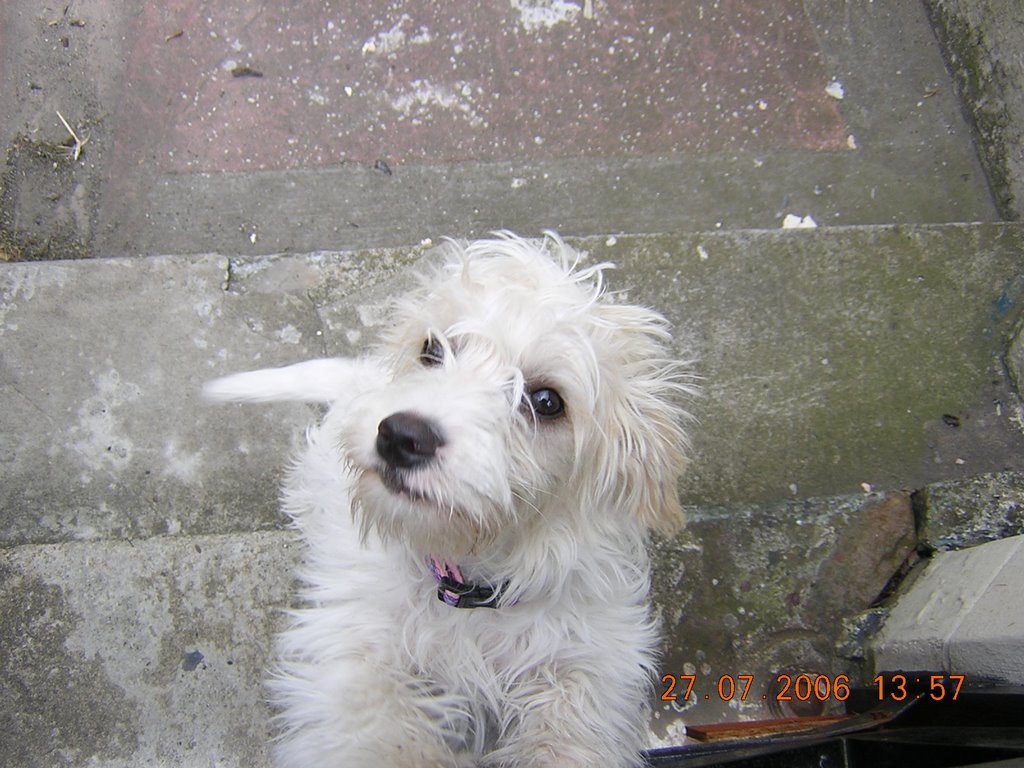


Youve gone to the shelter and found the perfect puppy, the puppy you and your family just have to have and now have the need to take care of your new puppy at home. Or, your female dog has had a beautiful litter of puppies but for some reason or another is not nursing them.

Do these scenarios sound familiar? If so, or if youve found yourself in a situation where you have a puppy that cannot be nursed the natural way, you are going to have to feed him or her by hand. The most effective means for accomplishing this is via bottle feeding.

When you first take on the task of bottle feeding a puppy it is extremely important to remember that the younger your puppy is, the more often you are going to have to feed him or her. During the puppies first two or three days of age you will need to bottle feed approximately once every two hours and for the rest of the first week a minimum of once every three hours.

After the first week your puppy is going to need to be fed at least five or six times per day. As puppies get older the frequency with which you will need to hold a bottle feeding session will decline.

Youre first order of importance when considering to bottle feed a puppy, or making the preparations to do so, that what you feed him or her is nutritionally balanced to fit the puppies needs. There are a number of puppy milk formulas on the market that will take the guesswork out of mixing your own formula, three of the most common are: Esbilac, Puppylac and Hartz Advanced Care Puppy Milk Replacement.

Now that youve determined what youre going to feed your puppy, you need to have a bottle to actually perform the task of feeding. Most veterinary clinics, pet stores and pet departments in larger department stores will have bottles specifically designed for nursing puppies. If you are unable to procure an actually puppy nursing bottle you can substitute a human infant bottle equipped with a preemie nipple.

The actual bottle feeding process is really quite simple. First mix the formula and be sure that it is mixed well and without clumps as otherwise will cause the formulas nutrients to not be dispersed well and also bottle nipple will plug. While the formula is cooling to room temperature make sure you puppy is lying on his or her belly.

Gently insert the nipple into the puppys mouth. If youre puppy doesnt take the nipple directly let a small drop fall on his or her mouth and with an extremely gentle prying motion open your puppies mouth and insert the nipple that way. Once the nipple is in place your puppy should take to the nipple and begin sucking naturally.

Be careful to not overfeed your puppy, play it safe and allow them to only drink a little less than they desire. Overfeeding can result in a number issues that can be detrimental to your puppies health that may require veterinary assistance to correct. It is always better to feed a lesser amount but increase the frequency of feeding sessions.

Just as with a human infant, puppies need to be burped too. At the end of a feeding session hold your puppy upright against your shoulder and gently pat his or her back. By doing so you will decrease the likelihood that your puppys belly will bloat and will lower the chances for your puppy to become colicky.


By: MattR


Article Directory: http://www.articledashboard.com


Matt operates the website A Happy Dog  hpp://www.ahappydog.com

Read more

Minggu, 12 Juni 2016

Teaching Your Dog Leave

0

Teaching Leave 

Leave means "dont interact with that".

"That" may mean a person, dog, rabbit, horse or cat.
"That" could also be a dropped food wrapper or nice steaming pile of fresh horse poop.
"That" is simply the thing you would like your dog to ignore, come away from, drop and leave alone.

"interact" means look at, touch, smell, move towards, think about.

So an example may be to ask your dog to "leave" the child with an ice-cream. As we do not wish to pair a negative with the child we will use a neutral tone of voice when training this command. We will not use harsh lead or collar corrections either. "leave" will start to mean to your dog "better stuff with owner" meaning your dog decides not to mug the child and their ice-cream but to return to you in expectation of something better.

This exercise will also need to be repeated many times in order to create an automatic response in your dog, your dog "leaves" the thing you want it to ignore because they have repeated the exercise "leave" so many times.

This video is from Emily Larlham, it is one of the best methods for teaching "leave":


Read more

Sabtu, 28 Mei 2016

Teaching Your Dog To Relax Properly

0


Relaxing or capturing calmness by Emily Larlham 
This video is a tutorial on how to teach your puppy or dog to be calm. 

It is excellent for teaching dogs to truly relax, teaching a down stay or stay on the bed does not teach the do to relax, it teaches them to stay still. Your dog can still be very tense, stresses or alert even if they are still. Emily uses another dog as a distraction, you can also use other things at a low level which tend to over excite or arouse your dog. Start at a low level of distraction and work up to higher levels as the dog relaxes more and more and as they understand the concept of "settle". 

This can work for dogs who chase shadows, are reactive to people and other dogs, are hyperactive, destructive, stressed or anxious. 


Some dogs need help to learn how to relax. Calmness does not come naturally to some breeds .By reinforcing your dog for being calm, your dog will start to choose calmer behaviors in the future and actually enjoy being calm.

Tips for teaching a Default Settle:
Don’t drop treats if the dog looks up at your hand as you move to give the dog the treat, instead try again later.
Don’t cue the dog “down”. It works better if the dog figures it out on his own and CHOOSES to lay down.
Use high value treats like real meat or cheese for such a wonderful behavior.
Miranda Sasse 

Read more

Rabu, 04 Mei 2016

Teaching your dog the appropriate place to go

0


All types of dogs respond to training in the same way. Once you get a better understanding of how a dog thinks, you will be more efficient in training yours. If someone doesnt understand this mindset, he or she can gain some knowledge by reading this article.

Do not allow your dog to use a wee-wee pad to go potty. These types of pads will leave a mark on your floor because of the enzymes. Wee-pads will also make your dog think that anything which looks similar is a great place to go to the bathroom. Teaching your dog the appropriate place to go from the start is always the more practical idea.


 During your training sessions, you should keep a close eye on the time. If you spend a lot of time on only one thing, your dog can get bored and frustrated. Ten minutes is about the length of time a dog can handle.

 One of the most basic dog training tips around is to use your dogs name to command its attention. You will not be able to control your dog if you do not get his attention first. This should be done at least 10 times daily. If you need to punish your dog, go to your dog. Dont call him or her to you and then punish.

 Expect mistakes and setbacks when housebreaking a puppy. Its important to immediately clean up the accident to make your training more effective. If your carpet begins to smell like urine and feces, your puppy will believe that it is the right place to potty and return to it again and again. Visit a good pet shop to find products created especially for odor control.

 Do not wear out your new puppy with an excessive training regiment. A puppy only has short bursts of energy and doesnt have a long attention; youve got to keep your training sessions positive and short. A training session that wears your puppy out is going to turn into an unpleasant memory, making him less likely to respond well to subsequent sessions, and more inclined to ignore what you are trying to teach him.

 You need to let your dog be a dog, so give him some time to burn off that energy. Make sure your dog is properly fed, given a comfortable corner or bed to sleep and has a good place to run and be active.

 When training your puppy, avoid tug-of-war type games. These games along with chasing games and wresting games encourage the little pup to start biting your hands. These are games you dont want to play with them until they are a little older and more mature so they dont get used to the bad behavior of nipping.

 If your dog suddenly starts misbehaving out of the blue, it is best to bring him to the vet so any health problems can be ruled out. An animal that is in pain is liable to act out in ways they would normally never behave. This is your dogs way of seeking help with a potential problem.

 It is important to take your dog on a rather long walk if you plan on being gone for several hours. Wearing him out may minimize his anxiety at being separated from you.

 You should teach all family members the same commands that you use for training your dog. For example, one person correcting your dog from jumping by saying "get off" and another using "down boy" will confuse the dog and be counterproductive to your training efforts. If the family can be consistent about commands, training will go easier.

 Always address your dog by name to ensure they get used to what name youve given it. If you want to have control of your dog, you have to teach him to respond to you. Practice this until you are satisfied by the dogs response. Never call your dog over to you in order to punish it, either.

 Do not let your own mood influence how you treat your dog. Start the training session with good feelings and expectations. Only correct your dog after he has done something you dont want him to.

 When you are house training a dog, you may want to use a crate. To make training more effective, consistency is the key. With crate training, your dog can be housebroken in no time.

 Its important that your dog enjoy training and look forward to training sessions. Your dog will enjoy training sessions most and be able to pay attention well if lessons are short. Ten to fifteen minutes is a good guideline. Rewards should be plentiful and varied. The more you reward your dog the more he will continue the positive behavior. If you make training sessions enjoyable for your dog, he is going derive pleasure from listening to you, as well.

 When training your dog, do not include any punishments. If your dog does not follow the correct behavior, instead of punishing him, gently teach him what to do instead. Build a positive relationship with your dog during the training process.

 Dogs need routine, so feed your dog at the same time every day. This also helps with training. This will help you better understand when your dog needs to go outside, so he doesnt go on the carpet and ruin it. When a dog has a schedule, they also learn the valuable skill of "holding it" until you take him for his next scheduled trip outside.

 It is important to involve the entire family when it comes to training your puppy or dog. It may be easier for one person to work with the dog until he has mastered basic commands. However, the dog should respond to the same commands when given by any member of the family.

 When training a dog, watch that you do not overdo giving the dog treats. Too many treats can really plump a dog up. Many people do not factor in treats when they are tabulating a pets diet, but they do add up, particularly while you are training.

 The best time to start training a dog is when its a puppy. While it isnt essential, a young dog will be easier to train. If you start training your dog when he is young, he will be almost as well-behaved as a child.

 When you get your puppy, be sure to create a bond to him by helping him learn his name. Repeat his name regularly, so he will learn to come to you when he hears it. These should be the primary words your dog needs to learn. Spending a lot of time interacting and playing with your puppy is the best way to establish a bond of love and trust. This will make him easier to train later.

 After learning some helpful hints on how to get through to your dog and train it to behave to your expectations you simply need to follow what you have learned. After changing your dogs behavior to fit with the tips suggested you can properly train your dog.

Read more

Minggu, 24 April 2016

Teaching the Dog to Heel

0

Basic Dog Training


- The Heel Command


It never ceases to amaze me how many people I see being pulled along by their dog while out "walking". What amazes me more is that most of these people blame their dog for this behavior. If they only realized that the problem is on the other end of the leash.

If your dog pulls on the leash, youre kidding yourself if you think youre the "master". Dogs are smart, and they will take advantage of a situation if you allow them to.

The worst part of this situation is that it only takes a short period of time to teach your dog to heel. Since walking with your dog is something that youll be doing every day, from the very beginning, it only makes sense that the "heel" command be among the first that your dog learns.

When your dog obeys the "heel" command, not only does it make it easy on your arms while out on walks, it also helps ensure that Fido is safe and behaved while out in public. It also lets him know that youre the boss, which is imperative in the human-canine relationship. And in those instances when a cat or other small animal runs out in front of you, it allows you to retain control when your dog wants to follow its instincts to chase the other animal.

For those unfamiliar with basic dog training, the function of the "heel" command is to have your canine companion walk alongside you, rather than in front of you. When a dog heels correctly, the leash remains slack, and Fido matches your pace, not vice-versa.

At this point, youre probably saying to yourself "That sounds great. But I bet its a hard thing to teach." Actually, its pretty straightforward, and like most dog training, it usually is taught by combining strong positive reinforcement and short but firm corrections.

Start out by putting your dog on a short leash, and have some small treats available. With the dog by your side, facing in the same direction, hold a treat in your hand. Issue the "heel" command using a firm, yet gentle voice. Proceed to walk forward. If the dog responds by walking along with you, praise him with an enthusiastic "Good Boy" (or Girl), and reward him by giving him the treat. If he doesnt heel, dont try to coax him with the treat. Consistency is important, and Fido needs to realize that hell get his treat when he displays the correct behavior. Remember to always reward him when the desired action is carried out. If youre lucky, a few repetitions of this series of actions will be all thats needed to teach your dog to heel.

With a little patience, this method will work well for many dogs, and will also help you to form a close bond with your pet. However, some dogs are a little difficult, and may be a little harder to train. This does not mean youve got a bad dog. It just means youll need to work a little harder to get the desired response. In this case, youll need to utilize some additional, corrective techniques.

As before, call the animal to your side and position him next to you, again facing the same direction. As you did earlier, voice the "heel" command, and walk forward. The dog will probably not walk with you. Instead, he will likely try to go off on his own. To correct this behavior, apply a firm but short correction on the leash. Never, never, pull your dog. Let the collar return to a slack condition.

Repeat the exercise, and if your dog obeys this time, praise him enthusiastically and reward him with a treat. Fido will quickly learn that to disobey the "heel" command results in a period of discomfort, but walking alongside at your pace gets him a tasty treat and a lot of vocal praise. It may take a few days, but if you are consistent in your training methodology, and reward him accordingly, Fido will soon be responding eagerly to your "heel" commands, and corrections will no longer be required.

About the Author:
Nick Bulka operates a number of pet related sites, including Dog Training and Pet Guide


This article is free for republishing
Source:
http://www.articlealley.com


Nick Bulka operates a number of pet-related web sites. Visit his sites at http://www.petsupplyguy.com, http://www.dogtraininginstruction.com, and http://www.pet-guide.us

Read more

Selasa, 22 Maret 2016

Nordic Championships

0


Read more

Senin, 21 Maret 2016

Teaching Puppies How To Play

0


PLAY SCHOOL!

Teaching your puppy appropriate play with humans

 Playing with your puppy is essential!  It builds your relationship with him, teaches him control and is fun!  However, puppies have sharp teeth, so play needs to be safe.


Follow the guidelines below to ensure that your dog plays by the rules!


1.Always use a toy!  It’s unacceptable to allow your puppy to mouth your hands, clothes or hair or to wrestle on the floor – this is basically teaching your puppy to bite people when anyone plays with the puppy (for more information on this see "puppy biting and bite inhabition") .Use a long rug boy, a ball on a rope or other boy that keeps your hands well away from your dog’s mouth. 

2. Teach your puppy to tug by holding the toy LOW TO THE GROUND and moving it as if it were a snake along the floor.  Allow your pup to chase the toy, then pounce on it and grab it.  Have a gentle tug game!  It’s OK for your puppy to rug and growl – it just means he’s enjoying himself!

3. Now teach your puppy to drop the toy when you ask.  After a tug game, keep your hand on the toy, but don’t put any pressure against it.  Now offer your puppy a really tasty titbit so eat.  It’s impossible for him to keep the toy in his mouth and eat the food as, so as soon as he drops the toy, say “Good” and let him eat the food.  KEEP THE TOY WHERE IT IS!  As soon as your pup has eaten the food, play again and repeat the routine.  After three or four repetitions, most pups are dropping the toy voluntarily when they see the food coming.  As soon as this starts to happen, say “Drop” or “Give” very quietly, just before your pup let’s go.  This then leads to your pup dropping the toy instantly on one quiet command!  At this point, you can just use the food as a reward from time to time, as being allowed to carry on playing is a reward in itself.

4. Your pup must abide by the golden rules of play.  If he so much as touches your hand or skin with his teeth while playing, you say “Too bad” and the game finishes that instant!  Your whole family need to be consistent with this!


Teach your puppy to play by himself

Puppies need to learn to play by themselves so that they can be occupied when you are busy or need to go out.  Chew toys are best for this. Kongs or hollow toys that can be filled with food are perfect as they reward the puppy for playing at the same time as keeping him busy!

However, old cardboard boxes, and safe, empty plastic water bottles make great playthings for active pups which need novelty and stimulation.


This video shows how to teach any dog of any age how to use a Kong toy:


This video shows how in expensive items can be made in to interactive toys:


Read more

 
Powered by Blogger