Tampilkan postingan dengan label puppy. Tampilkan semua postingan

Selasa, 21 Juni 2016

Just how much you need to love your Puppy

0

Of course this little monkey no


longer need bottles but think


back to the very beginning
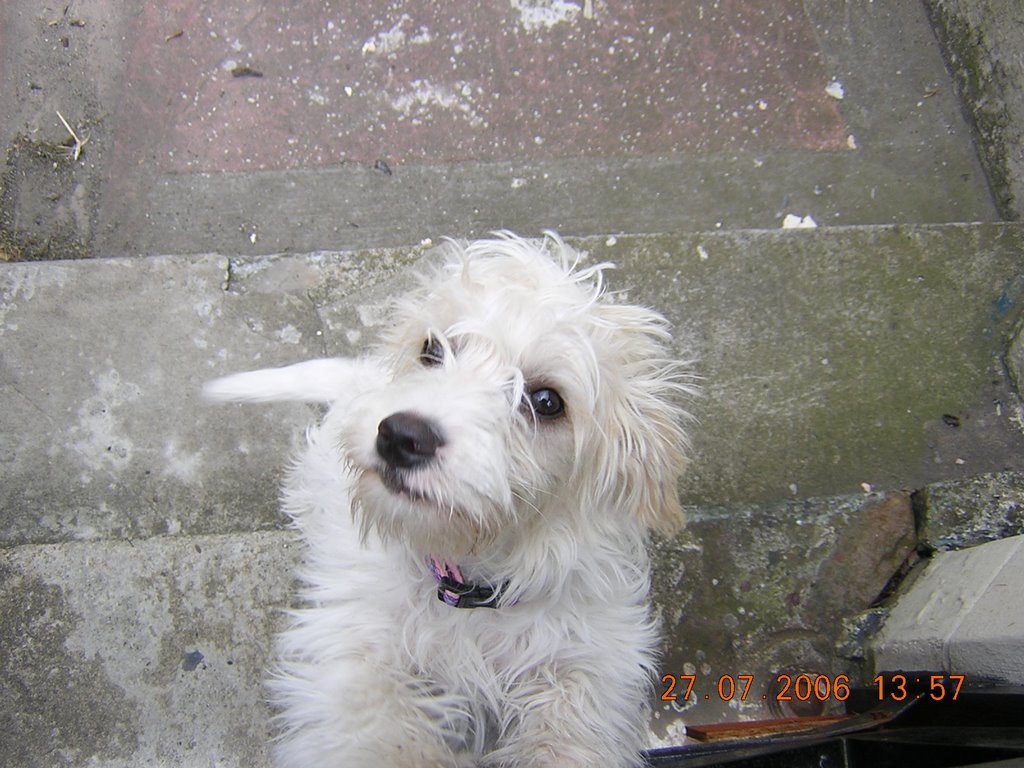


Youve gone to the shelter and found the perfect puppy, the puppy you and your family just have to have and now have the need to take care of your new puppy at home. Or, your female dog has had a beautiful litter of puppies but for some reason or another is not nursing them.

Do these scenarios sound familiar? If so, or if youve found yourself in a situation where you have a puppy that cannot be nursed the natural way, you are going to have to feed him or her by hand. The most effective means for accomplishing this is via bottle feeding.

When you first take on the task of bottle feeding a puppy it is extremely important to remember that the younger your puppy is, the more often you are going to have to feed him or her. During the puppies first two or three days of age you will need to bottle feed approximately once every two hours and for the rest of the first week a minimum of once every three hours.

After the first week your puppy is going to need to be fed at least five or six times per day. As puppies get older the frequency with which you will need to hold a bottle feeding session will decline.

Youre first order of importance when considering to bottle feed a puppy, or making the preparations to do so, that what you feed him or her is nutritionally balanced to fit the puppies needs. There are a number of puppy milk formulas on the market that will take the guesswork out of mixing your own formula, three of the most common are: Esbilac, Puppylac and Hartz Advanced Care Puppy Milk Replacement.

Now that youve determined what youre going to feed your puppy, you need to have a bottle to actually perform the task of feeding. Most veterinary clinics, pet stores and pet departments in larger department stores will have bottles specifically designed for nursing puppies. If you are unable to procure an actually puppy nursing bottle you can substitute a human infant bottle equipped with a preemie nipple.

The actual bottle feeding process is really quite simple. First mix the formula and be sure that it is mixed well and without clumps as otherwise will cause the formulas nutrients to not be dispersed well and also bottle nipple will plug. While the formula is cooling to room temperature make sure you puppy is lying on his or her belly.

Gently insert the nipple into the puppys mouth. If youre puppy doesnt take the nipple directly let a small drop fall on his or her mouth and with an extremely gentle prying motion open your puppies mouth and insert the nipple that way. Once the nipple is in place your puppy should take to the nipple and begin sucking naturally.

Be careful to not overfeed your puppy, play it safe and allow them to only drink a little less than they desire. Overfeeding can result in a number issues that can be detrimental to your puppies health that may require veterinary assistance to correct. It is always better to feed a lesser amount but increase the frequency of feeding sessions.

Just as with a human infant, puppies need to be burped too. At the end of a feeding session hold your puppy upright against your shoulder and gently pat his or her back. By doing so you will decrease the likelihood that your puppys belly will bloat and will lower the chances for your puppy to become colicky.


By: MattR


Article Directory: http://www.articledashboard.com


Matt operates the website A Happy Dog  hpp://www.ahappydog.com

Read more

Potty training your new puppy

0


Training should begin immediately after you have gotten home with your new pet. Training your dog is beneficial to both you and your pet. These suggestions will help you in your pet training efforts.

Introduce new animals to one another very slowly. Weighs the pros and the cons before adopting another pet. For optimal bonding, select a new pet whose personality is similar to that of your current pet.

 Stay consistent when you are trying to train your dog. Make sure everyone knows the right commands to give the dog; keep a list if necessary. Behavior should be rewarded or not depending on the affect that is being sought. Your dog will become very confused if each person responds differently to a single type of behavior. This will make training very hard.

 When you are house training a dog, you may want to use a crate. Let the dog out on a regular schedule to make the crate training most effective. Once your dog has acclimated to the crate, he will be far less accident-prone indoors.

 Dogs have the uncanny ability to have single-minded focus when something catches their attention. Repetition and practice will result in your dog waiting to take cues from you rather than being distracted by other things.

 Everyone in your household needs to be on board for dog training to be effective. While he may have one person who works with him on a regular basis, having everyone be a part of his training will teach him that he must follow the rules of the house at all times, and keep his training more consistent.

 Always get your dogs attention by using his name. To train your dog, you need a certain level of control. Getting them used to their name and coming when you call will help you achieve this. Repeat this several times daily. Also, dont punish your dog if he comes over when you call him by name.

 Teach your pet the proper way to walk on a leash. When they walk properly, it makes both of you safer when you both go walking.


 You need a commanding control if you are starting to train your dog. Your dog will neither obey nor respect you if he believes he is the leader of your household. Never allow your dog pull on the leash while you are on a walk.

 Although there are many benefits to using a harness, you will have less control over your dog than if he is wearing a cinch collar. If you plan on using a harness outside of training, put both that and a collar on your dog during the training process. This will teach him to respond to commands even after the cinching collar is removed.

 Using wee-wee pads is actually counter productive when you are potty training your new puppy. The problem with the wee-wee pads is that they leak and leave enzymes from urine and feces behind. Potty pads can also mislead your dog into thinking that similarly shaped items throughout your home, like rugs, are appropriate places to go. The best option is to toilet train your dog outdoors.

 Do not wear out your new puppy with an excessive training regiment. Remember that all dogs have short attention spans and puppies even more so. Hell likely forget everything you taught him if you do too much at once. He will also look at training as a negative experience and it will be harder next time.

 Choose from a range of treats to give your dog as training reward. These treats cannot be confused with every day treats at first, because you need to create a sense of specialness which will encourage the dog to obey your commands, since they know that the treats they will be receiving are out of the ordinary.

 Every dog is unique and is motivated to learn by different things. Dog training can be a learning experience, especially with it comes to determining what motivates your pet. It doesnt matter the reason you want to train your dog, you need to offer a variety of exercises along with positive reinforcement. Any time your dog is happy, you will find they have a better performance.

 Challenge your dog frequently. Give him "quizzes" to make sure he still knows his stuff, even if you both know he does.

 Dogs are just like people; they love hearing the sound of their own names and the use of the name will call them to attention. It is especially important to do this during the first weeks of training, in order to establish that name-attention association. Make the name simple and easy for the puppy to recognize.

 Use your dogs name when you can, as it will help to get your dog to pay attention. By using it as much as possible during the first weeks you own him, your puppy will learn that this sound is in reference to him. Choose a short name that is easily recognizable from other words.

 You do not want to use wee-wee pads when potty training your dog. The problem with the wee-wee pads is that they leak and leave enzymes from urine and feces behind. Potty pads can also mislead your dog into thinking that similarly shaped items throughout your home, like rugs, are appropriate places to go. Teaching your dog the appropriate place to go from the start is always the more practical idea.

 Try not to use wee-wee pads as a tool in potty training your day. The problem with the wee-wee pads is that they leak and leave enzymes from urine and feces behind. The pads may also confuse the dog because of their shape. It could cause the dog to think that a bathroom mat or welcome mat is a place to go potty. The best option is to toilet train your dog outdoors.

 A clicker works well when training most dogs. Using a clicker is as simple as showing your dog that good things happen when the clicking noise is heard. Try using this technique right away, doing it frequently over a span of a few days. Your dog will soon know that the clicking noise means that they are doing a good job.

 Dogs that are well trained are normally happy. Use the advice youve read to start training your dog properly..

Read more

Puppy Habits and Dog Training

0

Ive had the pleasure the past couple of weeks to be working with an adolescent Boxer/Rhodesian Ridgeback mix that was adopted by a very patient senior woman. This boisterous boy was rescued from a shelter and is now adjusting to his new home.  He is very sweet, and very friendly with people, but he has a bit of a social issue.  When he gets excited and wants attention, he behaves just the way a 3-month-old puppy would, though hes now about 18 months old and 75 pounds of lean muscle. He jumps up, humps, paws, mouths and nips and tugs at clothing.

Which brings up a common misconception about behavior: "Oh, hell grow out of it."  In some cases puppy behaviors do get less severe as they get older, even without intervention or training. But for most behaviors, owners need to take some kind of action to prevent their puppy from growing into a larger version with the same issues. Puppy classes, private lessons or other forms of training can help puppy parents learn the best ways to mold their puppies into good canine citizens.

There is good hope for this rescue dog. He now has a wonderful home with an owner who has the time and dedication to help him learn the manners he missed out on when he was younger. The training will involve some positive redirection, clear boundary setting and appropriate outlets (such as exercise and interactive toys) for his enthusiasm. I cant wait to see what a charming young man hell turn into!

Read more

Senin, 20 Juni 2016

Ethical Puppy Training and Positive Reinforcement

0


So you got a new puppy and couldnt be happier with your new little bundle of joy when they chew your favorite shoes, piddle on your rug, and jump all over your visiting in-laws. Oh no! Just like baby humans, puppies love to cause trouble and make messes! Also like baby humans, new puppies need to be taught how to behave properly.

When adding a new puppy to your family, good training is vital to ensure a happy relationship with your pet. There are so many ways to train a puppy, but your cute and fuzzy new friend deserves ethical puppy training.
 
Ethical puppy training means using positive reinforcement for desired behaviors and avoiding punishing bad behaviors. Your job as an ethical puppy trainer is to make the desired behavior as attractive as possible to the puppy and distract them from unwanted behaviors. For example, if your puppy loves to chew, provide plenty of chew toys and praise them when they chew the toy. When you catch your puppy chewing furniture, calmly redirect their attention to the toy. You will have to repeat this often before it sticks!

Your puppy needs you to work with it to learn how to behave properly. Starting as young as possible, practice walking on a leash without pulling. If your puppy likes to jump on guests, ask someone to help you practice by going through the visitor scenario over and over again, rewarding your puppy when they remain calm.
Reward-based training will not only improve the behavior of your pet, it will improve your relationship with your pet. You will enjoy your pet much more when they are well behaved, and your pet will trust you and see you as a source of treats and love.
 

If you are busy, search for a pet trainer who specializes in ethical puppy training to assist you in giving your puppy the best possible start in life. If your once well-trained pet is suddenly exhibiting unwanted behaviors, get them to a vet for a checkup - a health problem may be causing the pet to act up.

Read more

Sabtu, 18 Juni 2016

Puppy Potty Training Made Easy

0

For many families, even if they do not train anything else with their puppy, they will take the time to conduct puppy potty training. After all, who wants to go around cleaning up puppy "messes" from the carpet every day? Puppy potty training can be frustrating for all involved. Remember, though, that puppies are just babies and they do not know what you want until you let them know. There are several strategies to try when you are conducting puppy potty training.

Use A Crate: Using a crate will make puppy potty training that much easier. If you are unable to watch your puppy, put it in the crate. A crate is like a den, and dogs do not like to soil where they sleep. Use the same command when sending puppy into the crate, and always offer a reward while doing puppy potty training. Puppies may cry in the crate at first, but remember, giving them free reign will allow them to potty anywhere in your house. Do not leave puppy in the crate for long periods of time - allow puppy frequent trips outside for puppy potty training.

Designate A Potty Place: It will make puppy potty training easier if you take puppy out to the same place each time. While doing puppy potty training, the yard is only for going potty - take puppy to the same area each time. Only stay out about 10 minutes at a time before going back in. Playtime should only be allowed after the puppy has gone potty.

Reward Success: Remember, puppy potty training is about getting a desired behavior. When puppy receives a reward of praise or a small treat, they start associating puppy potty training as being a good thing. Happy puppies learn faster.

Use A Leash: An essential part of puppy potty training is being able to keep an eye on your puppy during the process. This can be difficult to do when you are trying to get other things done around the house. Using a leash tied to your waist can allow you to keep puppy near so he or she cannot sneak off to use the bathroom.

Practice: Like anything else, puppy potty training takes lots of practice. Take puppy outside for puppy potty training every time he or she eats or drinks, comes out of the crate, or wakes up from a nap. Take puppy out for puppy potty training as often as possible, and keep an eye out for the times that your puppy needs to potty on a regular basis.

Avoid Paper: While some puppy owners swear by using paper for puppy potty training, ultimately they are only teaching puppy to potty in the house. Instead, work on teaching puppy that outdoors is the only acceptable place to potty.

Prepare For Accidents: Puppy potty training is bound to have accidents, so instead of stressing out about them, prepare for them. Before puppy potty training begins, make sure that you have plenty of cleanup materials on hand, including paper towels or rags, odor neutralizers, and enzymatic cleaners. Keep these within easy reach for you, but out of reach for the puppy, to make puppy potty training accidents easy to clean up.


Nick Luvera - About the Author:
Cheap Puppy Pads offers super absorbent puppy pads that take the hassle out of house training puppies. Great for puppies and for older dogs that are incontinent. Once the dog is accustomed to using the pads, they can be placed outdoors to encourage dogs to potty outside. Also, be sure to visit our site to sign up for free weekly dog training tips.
Source:  http://www.articlesbase.com/pets-articles/puppy-potty-training-made-easy-496790.html

Read more

Kamis, 16 Juni 2016

Puppy house training

0

Taking a puppy to your home is a big responsibility since you have to meet all the animal’s health needs and provide a loving environment. In the first month of accommodation, that may also be the first in your pet’s life, puppy house training is essential. What does puppy house training imply? First of all, as you may expect to potty train it, then you have to make sure it socializes well and is perfectly safe to leave alone in the house. This means puppy house training prevents any form of disruptive behavior and separation anxiety.

Puppy house training will teach your dog that it has to be alone from time to time. How can you avoid any nasty behavior in your absence? At the beginning of puppy house training that shouldn’t be too difficult at all. You may leave the dog in an isolated area of the house, in some sort of confinement. Don’t feel sorry for the pup as it will spend most of the time sleeping. Later when you continue puppy house training again, so make sure the dog has something to do when you leave for work, like playing with a toy or eating.

Frequent walks, particularly after meals are also an essential part of the puppy house training. Taking the pet in areas where it can come into contact with other people and even dogs is a good idea for the development of social behavior. Dog owners who don’t make time to take care of the puppy house training are very likely to have an unsocial friend with unexpected reactions. Sooner or later they would have to ask for the help of a professional trainer or would even give up the dog.

Last but not least, puppy house training is part of the family program. The training part is not limited to one family member, since the dog has to learn to obey commands in a general manner. For instance the “sit” and “down” orders are basic and puppy house training can use them when the animal is at least several months old. With very young dogs, puppy house training is somehow restricted to the potty and the food routine. This is also the time to shower lots of love on your friend and prove how important it is to the family. Positive puppy house training is probably the most effective methods of our time, so have a go!

Read more

Jumat, 10 Juni 2016

The Obamas Narrow Down Their Decision which puppy is right for them

0

First of all, I think it sets a great example for the public that the Obamas are looking to adopt their dog from a shelter. Dogs are the products of their environment, and if a dog is raised in a loving home with loving hands, that dog can be a healthy, happy and loving member of their family, regardless of pedigree.

And its also great that the President-elect has been doing his homework. However, it is important for Obama to keep in mind that breed descriptions and terms used by the AKC are all very subjective. Yes, many dogs are bred for specific traits and for carrying out certain tasks and activities. Their breed specifics will make that DNA a little stronger in some areas than other. But a dogs breed wont dictate personality - just like how you wouldnt say a person is friendly, reserved or aggressive based on their nationality or ethnic background.

Ive said it before, and Ill say it again: Im not breed biased. First and foremost their doggy DNA makes them dogs. And I know that you can train and teach a dog to love or hate almost anything. In fact, you can train any animal to do anything they are physically and mentally capable of doing.

So the most important thing for the Obamas to consider is how the dog will fit in with their lifestyle. While they must be able to provide the dog with legal outlets for the innate behaviors that it was bred for, they must also remember that dogs are living breathing creatures that have individual personalities! Theyre NOT inanimate objects like furniture, cars and computers that you can shop for through a catalog. I am a strong believer that dogs should be adopted based on personality, behavior, and demeanor. How a dog reacts at your first meeting is a better indicator of how it will fit into your lifestyle than the history of how the dog was bred. Its best to pay attention to what the dog is doing, not what you think it should or might do based upon breed alone. 

And if they are considering adopting a puppy, they need to think about proper socialization and dog training focused on preventing behavioral issues. Its just like when the Obamas had their children, they had to think about consistency in parenting and all the various responsibilities associated with taking care of another life in the long term. They had to baby proof their home, among other things. And with a puppy, they will have to puppy proof their home and know how to manage the responsibilities of raising a healthy and happy puppy. 

From what I’ve seen, the Obamas seem like a real traditional family that’s big on responsibility (Malia and Sasha will be making their own beds in the White House!) and they will remain focused on instilling values in their children to encourage them to be productive. Kudos to them for being such responsible parents! 

So they need to think about the dogs needs - Will the girls be brushing and grooming the dog regularly? Will Barack Obama run with the dog 5 miles or have the Secret Service pulling doggy exercising duties?

And finally, they have to think about taking care of the dogs needs in the long run. The dog will likely outlive Obamas presidential administration, even if he serves two terms. So the dog will be with them long after they leave the White House. And if the kids leave for college, Barack and Michelle will have an adult dog to take care of even though their daughters have moved away. So its important for them to consider their immediate lifestyle as well as what their future holds.

Read more

Kamis, 09 Juni 2016

Teach your puppy his or her name

0


Every dog requires training to some extent in order to learn what to do and of course, what not to do. These tips should help you train your dog.

Teach your puppy his or her name before you start to train him or her, as this creates a bond. Use his name frequently, and make clear that you want him to respond by coming to you when you call his name. There is no other word your puppy should be taught first. Make sure to spend time with your dog in order for him to learn and trust you. When you set this trust early on, the puppy will be more open to the next steps in training.


 Training is a great way to help your dog with separation anxiety. It is quite possible that if your dog frequently barks unceasingly or damages your belongings when you leave, he or she is actually suffering from separation anxiety. You need to take the time to train your dog to not engage in these undesirable behaviors while youre not home. A great way to ease your dogs anxiety is through love and compassion.

 Use the dogs name often when training to ensure that you have their attention. By using his name all the time in the first month of having our dog, he should associate his name with focusing on you. Choose a short name that is easily recognizable from other words.

 A wise tip in canine training is to always call the dog by his rightful name, rather than using any nickname or other deviation. To maintain control of your dog, you must be able to encourage a favorable response. Try this with your dog at least ten to twenty times. Avoid confusion by not calling your dog to you for punishment.

 Use the appropriate tone of voice when you are correcting your pet. Dogs tend to be well in tune with how their trainers are feeling. An appropriately stern tone can reinforce discipline.

 When training your dog never punish him; doing so will only make him be resistant to any further training. You should make every effort to prevent the behavior in the first place, but if your pet does misbehave, show him what he should have done instead. You should make training a time to interact with your dog, you want to build a positive relationship with him.

 You need to let your dog be a dog, so give him some time to burn off that energy. Your dog requires a healthy diet, room to exercise, and plenty of activities and toys to keep him or her busy.

 Communication is the basis for dog training. As you train and interact with your dog, you must be consistent and straightforward. This applies to corrections and rewards, as well as your body language, when training. Remember to always pay attention to the communication signals from your dog. The animal will usually let you know what he or she is feeling.

 In order to get your dog to obey you, it may be wise to take obedience classes. The obedience instructors can teach you a variety of ways to deal with issues such as your dog not listening, excessive barking, or disobedience toward commands.

 Ensure that your dog understands the rules. This means everyone living in the house needs to enforce the boundaries you set. This will quickly undo all of your hard work and training.

 Dont bog your puppy down with more information than he can process. You need to keep your training sessions short so that your puppy pays attention. If training sessions are too long, the puppy wont remember the specifics of the training session, just that is was grueling and exhausting. This will make it harder to train him next time.

 When house-breaking your puppy, choose a specific phrase to use when its time to go outdoors. When you take your dog out, repeat this command. This will help him form an association between being taken outside and doing his business.

 It is vital to train your dog when its still a puppy. Younger dogs learn more quickly and easier than older canines. Beginning your dogs training when he is still young will help him to be a well-behaved dog as he ages.

 Training your dog can be much easier if you use a crate. Use a consistent schedule for proper crate training of your dog. Over time, a dog that is properly crated trained is less prone to having accidents inside the home.

 Be sure to have your dog spayed or neutered at six months. You should do this at the same time you first take the dog to obedience training. A dog that has been spayed or neutered will be a more obedient dog. By spaying or neutering a dog he will have a longer happier life.

 Limit the duration of training sessions. It is possible that your dog will lose interest if it is made to do the same thing over and over. Do not spend more than 10 minutes on each session.

 Have your dog learn to just hold one of his toys in his mouth, instead of chewing on it immediately. When he puts the toy around his mouth, use a training clicker and offer him a treat. After your dog succeeds in mouthing an object a few times, move on to rewarding the dog for picking it up with his mouth. When he does, just click and then give a reward. After that, only give the reward if he does hold the toy in his mouth.

 Communication is one of the essential aspects of training your dog. Make sure you are clear and consistent when you are working with your dog. This means to be consistent not only with words, but with corrections and rewards. Be well aware that your dog is telling you something too. They will inform you of whether or not they are overworked, anxious, or having a great day.

 You can prevent your dog from destroying your home by keeping it outdoors when you are away from the house. When this isnt possible, you want to provide things that both appeal to your dog and that are okay for the dog to chew on. Establishing acceptable chews toys is also about keeping those things you do not want your dog to chew up behind closed doors or well out out of reach.

 Dogs that have received no training are likely to destroy your possessions and try your patience. If you use the advice in this article, you will be ready to teach your dog that skills will help the owner-pet relationship..

Read more

Senin, 06 Juni 2016

Reasonable Puppy Potty Training Expectations

0


Puppy Potty Training: This is often the first thing you need to do with your puppy. This is your first training request for your new puppy. To save you lots of work, confine your new family member, the puppy, to rooms that are tiled or have washable rugs. This will save you a lot of work in the months to come. Its important to have reasonable expectations when it comes to potty training your puppy.
While potty training your puppy is important here is an ideal area you can learn how not to lose your temper and see that positive praise really works and makes the whole process easier on you and your puppy. As you start to get to know each other, some of the guess work is eliminated. At first you are going to have to take your puppy to the potty a lot.
The more time you can spend with your puppy the more easily you will get to your end goal of a dry house. Puppys need to go to the potty about eight to ten times daily between six weeks and three months, that is how often they need to go. As you start to read the puppys clues, to when they need to use the potty, things become easier. A puppy will need the potty, ten to fifteen minutes after eating.
As the puppy gets older their ability to hold on increases, due to their muscular development. Therefore, you will need to take them to the potty area less often. At four and a half months to six months you see a reduction, the high figures of early puppy potty training go down to four to six times daily. Tips to reading your puppy are if they start to turn in circles, sniff the ground a lot or are hunching their back, all these are signs to get your dog to the potty area.
Really give over board praise when the puppy has used the potty area, after all it is one less mess for you to clean up. Really praise the behavior that you want to see, positive reinforcement works. Accidents will happen, do not punish your puppy, no shouting or hitting. If you manage to catch the puppy in the act, pick them up and rush them to the potty area, if they then manage to finish off in the right area lots of praise.
Take your puppy to the potty after they have had a nap, again they are more likely to use the potty. Take away drinks and food at night, if your puppy has drinks and food at night they are going to want to use the potty area, you are going to want to sleep.
Another tip is that on average puppys can hold on the same amount of hours as their age in months, so if they are three months they can hold on about three hours. This is not a rule and different breeds vary as well as the puppys own personality. Keeping your puppy on a food schedule, this will help a lot. Puppy need lots to drink so do not limit their drinking throughout the day.
You may like to pop them on the potty area ten minute after they have had a drink. If you feel that your puppy is not getting potty trained, even though you have been trying you may need to see your vet to just check there are no problems.


Read more: http://www.articlesbase.com/pets-articles/reasonable-puppy-potty-training-expectations-2133716.html#ixzz15jtJlX9D 
Under Creative Commons License: Attribution

Read more

Puppy Class!

0

Its hard not to fall in love with those soft, brown eyes, or to coo at the tiny features of a new puppy.  Puppies melt our hearts.  They also bite our hands with their sharp little teeth, jump on our legs as we try to walk, and pee on the floor (oops!) instead of the yard. 

But thats what puppy class is for.  That, and the critical puppy-to-puppy socialization that nothing else (not even playing at home with your other dogs) offers.  We have to protect these little ones who are still on their path to becoming fully-vaccinated adults, so romping off to the dog park is a big no-no (way too many chances for disease, and also a risk of an unfriendly dog doing some serious damage).

Puppy class allows growing dogs (ages 8 to 16 weeks) to learn lots of life skills.  It also gives their owners the opportunity to ask the burning "should he really be doing this?" and "am I handling that right?" questions.  We cover things that puppy parents may not have thought of, with the hope that every graduating puppy is well on his or her way towards becoming a well mannered adult.

Puppy class is a joy, one of the perks of being a dog trainer.  A client once asked me, towards the end of a rollicking play session where 6 adorable puppies were tumbling around on the floor, "you actually get paid to do this?!?" 

Well, yes.  Its not as bad as, say, a leash walk through cold, sleety rain with a ninety-pound dog who wants to take a chunk out of my arm.  But it all comes with the territory.  And I take pride in knowing that my puppy classes are well run.  They are jam-packed with good information, covering all the necessary topics in a fun way.  The play sessions are kept to the right length so puppies dont get too crabby with each other and so we get in plenty of "work" too. Overall, they are a joy not just for the dog trainer, but for the puppies and their owners too.

Now, dont you want to sign up?!

Next Class: Saturday, July 28th at 4:00 PM
Location: Rose City Veterinary Hospital, Portland
Cost: $140 for the 5 week course
Requirements: Puppies must be enrolled and current on their vaccines (at least one DHPP/DAP and one bordatella two weeks before the first class).  Ages 8 to 16 weeks; no more than 8 puppies per class.

Read more

Minggu, 05 Juni 2016

EFFECTIVE METHODS OF TRAINING YOUR DOG

0

EFFECTIVE METHODS OF TRAINING YOUR DOG

Training your dog is something that each and every owner of a pet has to associate with. You have to use time doing what requires to be done and carrying it out efficiently. Pet owners who do not train their animals effectively will have to go through difficulty down the road with misconduct and distressed neighbors. It is worthwhile to get the dog training through as soon as feasible.

But how?

How can you successfully bring into play dog training? There are a number of techniques out there and you can make an effort to try all of them. You have these choices for the reason that every person has a distinct notion or apprehension in relation to which is the top technique obtainable. You will probably employ more than one technique before you can come across something that suits you fine. Even as all these techniques work, you are the person who should execute them successfully as the owner of the pet. Read on for a few opinions to mull over on the topic of dog training.

One alternative that you have is consenting to a proficient person to do the job for you. This is to a certain extent a helpful manner in particular when you are not at home or capable to give over the time and stamina required to train the dog correctly. It can be expensive however you can in addition find dog trainers who will do it for a lot less than others.

A different technique that can be thought about in dog training is that of making use of training collars. These do the job in a range of methods. A few work by sending out a sound that is painful to the dog, if he does anything wrong. Others function by giving off a small electrical shock to the dog if he goes out of line. These techniques, both of them, are certainly of use.

And, both of these techniques are absolutely safe and sound for your pet as dog training gadgets.
Of course, you can make use of your own techniques of dog training as well. One way to keep the dog inspired when doing the right thing is to give them an award. Dog training does not have to be hard when you give consent to others to assist you to come across the right way to get the job done.

Read more

Sabtu, 04 Juni 2016

How to Train Your New Puppy

0


When you get a new puppy, training can be very overwhelming. Sometimes the puppy is just so naughty and so mischievous that you might lose your temper. It is important to remember to keep your puppy training ethical. That means no hitting and trying not to raise your voice. A puppy does not understand what all of that is about. You have to train them in a way that they will be able to learn.

Start Young

You want to start training your puppy at about four weeks old if you have the puppy that early. The training at this point will just be to get them to respond to some sort of cue like a whistle, clap or snap. At six weeks you can start teaching them to walk on a leash and obedience training. It is also important to start crate training young.

Introduce Them to Stimuli

It is important to introduce young dogs to the outside world. You want them to be familiar with toys and floors of all different materials, used to getting touched all over and okay with loud noises of any variety. This will help them behave well even when in new conditions. Some children may approach your dog in the future and touch them on the head, and if your dog is not used to getting touched there it can end badly. It is important to get them used to loud noises for their own benefit. Otherwise they will spend every Fourth of July and thunderstorm cowering in the bathroom in complete terror.

Be Kind

You have to remember through all of your training to praise them when they do things right. You also have to remember that, if you get home and there is an accident, you cannot yell at them. They will not know why you are yelling and they may just get scared.

Difficulties

Training a puppy is not always easy, but you want to make sure that you are doing it ethically. You want to train a well-behaved, loved dog. You cannot do that by treating it improperly. If you need any guidance, there are puppy training courses that you can go to in order to learn tips and tricks to train your dog ethically.

Read more

Rabu, 01 Juni 2016

Puppy Socialization Risky Business

0

Behavior issue risk vs health risk - always a touchy subject amongst veterinarians, dog trainers, and dog owners...IMO, education - where classes are specifically designed and geared towards puppy socialization and prevention of behavior issues in a safe, controlled, and managed environment should be a priority with our domesticated dogs...Unfortunately, keeping new pups tucked away at home until they are well past the “prime period” is still more of the norm in our society than not.
Why you ask, is it so important? After all, it’s only a manner of of couple of weeks, right? Behaviors - desired and undesired are formed immediately out of the womb. Pups soon learn what works and what doesn’t work with their mother and littermate’s, as well as the human(s) handling them. After they are taken into their new homes many of these important learning opportunities are left up to the family members to continue teaching - including proper use of mouth (bite inhibition), communication (in specific doggy language), what is appropriate play and what isn’t (again, in doggy world). Yes, we humans do as much as we can to help - but because we are a different species, with our own species specific language, play styles, greeting behaviors, and innate behaviors, it is probably best to leave it up to dogs themselves to teach one another - similar to children on a playground - but with responsible humans monitoring their actions in order to help them build confidence, and form those social graces we all want our dogs to have.

Read more

How To Train Your Puppy The Right Way – Introducing Your Puppy To Your Home And Family

0

Puppy training is very important, whether you are training your first puppy or your 20th. Properly training and socializing a puppy is vital to making it a valued member of your family and your community.


In some ways training a puppy is easier than training an adult or adolescent dog. One reason is that the puppy is essentially a "blank slate", untroubled by past training techniques and other issues. In other ways, however, the puppy can be more difficult to train than an older dog.


One challenge to training a new puppy is that puppies are more easily distractible than adolescent and adult dogs. Everything is new to a puppy, and every new experience provides a new chance for distraction. For this reason, it is best to keep training sessions short when working with a puppy, and to end each training sessions on a positive note.


It is also important to allow the puppy plenty of time to play, and to interact with other puppies and dogs. Socialization training is vital to making your new puppy a good canine citizen, as dog aggression is a growing problem in many areas. A properly socialized dog learns how to play properly with other dogs, and overly aggressive play is punished by the other dogs in the play group.


This type of play learning is something that happens among siblings in litters of puppies. As the puppies play with each other, they learn what is appropriate and what is not. Inappropriate behavior, such as hard biting or scratching, is punished by the other puppies, by the mother dog, or both.


Unfortunately, many puppies are removed from their mothers and sold or adopted before this socialization has fully occurred. Therefore, puppy play sessions are a very important part of any puppy training session. Most good puppy preschool training programs provide time in each session for this type of dog interaction.


Introducing your puppy to new experiences and new locations is also an important part of puppy training. Teaching your dog to be obedient and responsive, even in the face of many distractions, is very important when training dogs and puppies.


It is important for puppy owners to structure their pets environment so that the puppy is rewarded for good behaviors and not rewarded for others. One good example of this is jumping on people. Many people inadvertently reward this behavior because it can be cute. While it is true that jumping can be cute for a 10 pound puppy, it will not be so cute when that puppy has grown into a 100 pound dog.


Instead of rewarding the puppy for jumping, try rewarding it for sitting instead. This type of positive reinforcement will result in a well behaved adult dog that is a valued member of both the family and the community at large.


This type of reinforcement can also be used in potty training the new puppy. For instance, teaching a puppy to use a unique surface such as gravel or asphalt is a good technique. The theory is that the puppy will associate this surface with going potty, and therefore be reluctant to use other surfaces (like your kitchen carpet for instance) as a potty.


Copyright Jonathan Cheong - http://www.absolute-dog-training.com


Written by: Jonathan Cheong

Read more

 
Powered by Blogger